Kaitlin Brand, Shelby Flores-Thorpe, Yuzi Zhang, Amelia Roebuck, Tiffni Menendez, Rachel Linton, Taylor Bishop Scott, Max Crowley, Alexandra van den Berg and Deanna M. Hoelscher
This blog post is based on the Evidence & Policy article, ‘Evaluation of researchers’ policy-related knowledge, needs and self-efficacy before and after the 2021 Texas Legislative Session’.
Evidence-based health policy has long shaped public health intervention in the United States. For example, smoke-free policies, first introduced in the 1970s, prevent exposure to second-hand smoke, and folic acid fortification of grain products in the late 1990s significantly reduced rates of spina bifida and neural tube defects in newborns.
Despite these successes, there’s still a considerable delay in the knowledge transfer of research to policy and practice. Many public health researchers want their work to inform health policy but face barriers to engagement with policymakers, such as different communication styles, decision-making frameworks, and timelines. Developing ongoing relationships and partnerships between researchers and decision-makers offers one solution as multiple studies suggest policymakers are more likely to use evidence to inform health policy when it comes from someone they know or respect.
The Texas Research-to-Policy Collaboration (TX RPC) Project is led by faculty and staff at the UTHealth Houston School of Public Health in Austin and the Michael & Susan Dell Center for Healthy Living. Our team adapted the TX RPC Project, from the Research-to-Policy Collaboration model, to align with Texas’ legislative process and public health priorities. We provided interested state researchers with hands-on training on Texas’ legislative process, navigation of the policy arena, their role in the partnership, and effective interaction with policymakers. In addition, the TX RPC Project provided needed infrastructure and coordination to facilitate researcher-policymaker interactions and relationship-building.
In our Evidence & Policy article, we evaluated researcher knowledge, self-efficacy, and training needs both before and after they completed the TX RPC Project training and were matched with legislators during the 2021 Texas Legislative Session. Researcher-legislator matches were based largely on how closely a researcher’s expertise overlapped with a legislator’s priorities for the legislative session. As a result, not all TX RPC Project researchers were matched.
Overall, researchers gained a stronger understanding of the policy process after participating in our initiative, and their need for further training decreased significantly. However, their self-efficacy in engaging with policymakers did not change between baseline and follow-up. This discrepancy may be attributed to the fact that some TX RPC Project researchers already had experience in policymaking activities. Another explanation could be that researcher-legislator meetings were difficult to schedule during a short legislative session that limits opportunities to engage. It is also possible that motivation for engaging effectively feels out of reach in times of shifting macro-level political climates.
When we compared researchers matched with a legislator compared to those who were not, we found matched researchers started out with higher policy-related self-efficacy and fewer training needs than unmatched researchers, but there were no differences between the groups at follow-up. In our article, we cite the Dunning-Kruger effect — where those with expertise tend to underestimate their capabilities — as a possible explanation for these findings. Participation with the TX RPC Project may have simply helped researchers that were more engaged or interested in health policy identify areas for growth, resulting in only minor changes in their reported levels of self-efficacy. This insight, along with the baseline differences in self-efficacy and training needs between matched and unmatched researchers, suggests more tailored training would be warranted in the future. For example, those with lower self-efficacy at baseline may benefit from a training focused on building efficacy and confidence before receiving the current training model.
We discovered anecdotally that fewer research-legislator meetings were taking place than planned or expected. Researchers’ areas of expertise didn’t always overlap with bills moving through the Texas Legislature, and they often lacked the time and resources to seek out additional meetings with their legislators. At the federal level, it’s been noted that successful researcher-legislator partnerships should go beyond ad hoc interactions and aim for sustained engagement, mutual learning, and a deeper appreciation of the constraints and incentives of each community. For instance, researcher interactions to engage in policy work are often not evaluated as part of promotion or tenure discussions or criteria. Furthermore, infrastructure that provides logistical assistance to researchers within a coordinating entity is necessary since engagement resources are not consistently provided by academic institutions. This aligns with the mission of the nonprofit TrestleLink, which supports teams in implementing practices like these.
Our findings highlight the benefits of building researchers’ policy-related capacity and their readiness to engage with state legislators. Future efforts could improve the existing framework by incorporating a coordinating entity to assist with scheduling, logistics, and fostering long-term relationships. The potential to transform and modernise our national public health system lies just beneath the surface of these budding partnerships.
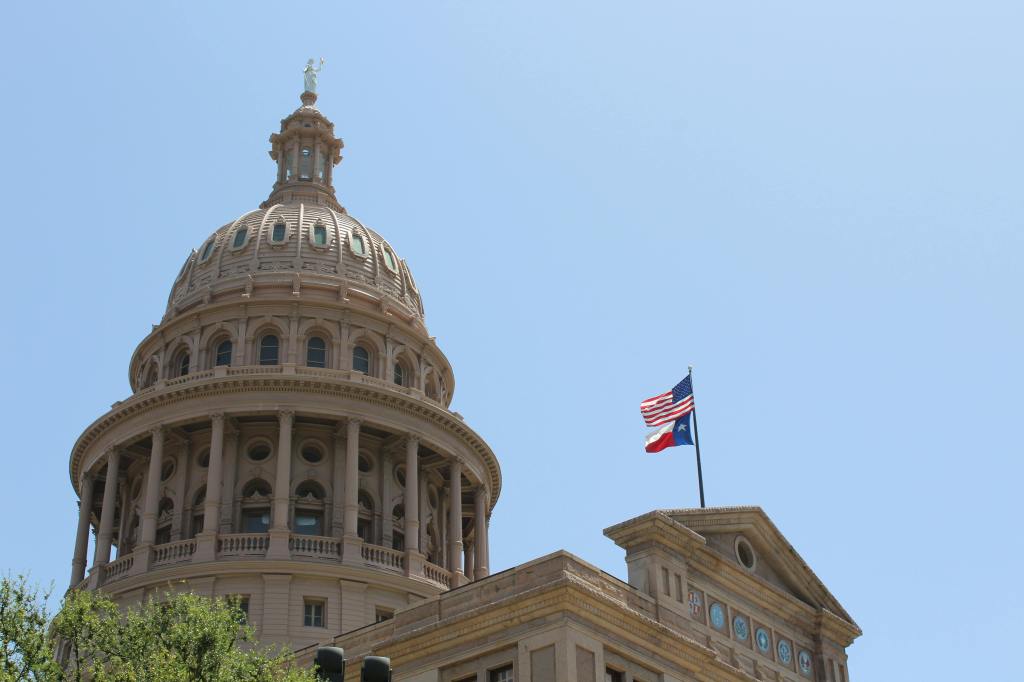
Image credit: Photo by Ruben Reyes on Unsplash

Kaitlin Brand, Graduate Research Assistant, PhD Candidate. UTHealth Houston School of Public Health, Michael & Susan Dell Center for Health Living, Austin, TX, United States. kaitlin.m.brand@uth.tmc.edu; www.linkedin.com/in/kaitlin-brand-mph-rd-528435131

Shelby Flores-Thorpe, www.linkedin.com/in/shelby-flores-thorpe-phd-med-ches-657031137
Deanna M. Hoelscher, https://www.linkedin.com/in/deanna-hoelscher/
Yuzi Zhang
Amelia Roebuck
Tiffni Menendez
Rachel Linton
Taylor Bishop Scott
Max Crowley
Alexandra van den Berg
Read the original research in Evidence & Policy:
Brand, K. Flores-Thorpe, S. Zhang, Y. Roebuck, A. Menendez, T. Linton, R. Scott, T.B. Crowley, M. van den Berg, A.E. & Hoelscher, D.M. (2025). Evaluation of researchers’ policy-related knowledge, needs and self-efficacy before and after the 2021 Texas Legislative Session. Evidence & Policy, DOI: 10.1332/17442648Y2025D000000054.
If you enjoyed this blog post, you may also be interested in reading:
The Capabilities in Academic Policy Engagement (CAPE) programme in England: a mixed methods evaluation OPEN ACCESS
Disclaimer: The views and opinions expressed on this blog site are solely those of the original blog post authors and other contributors. These views and opinions do not necessarily represent those of the Policy Press and/or any/all contributors to this site.
 Evidence & Policy Blog