Dorte Caswell and Tanja Dall
This blog post is based on the Evidence & Policy article, ‘Structuring sustainable knowledge brokering in street-level organisations‘.
Let’s face it: everyone loves the idea of evidence-informed practice – until it’s time to actually do it. In our Evidence & Policy article, we dive into the messy, fascinating, and occasionally bureaucratically baffling world of knowledge mobilisation in public service organisations. Spoiler alert: there’s no magic wand, but there are some pretty good pointers on how to make the hard work of knowledge mobilisation work.
Our study is based on a long-term collaboration with five Danish municipal employment services. These organisations juggle national policies, performance targets, and the unpredictable realities of human lives. Within this whirlwind, we asked: how can research and evidence become part of daily practice, rather than something that only shows up in PowerPoint presentations?
Instead of offering a one-size-fits-all model, we present a framework that emerged from real-life practice. It’s built around three axes of knowledge mobilisation:
Horizontal knowledge mobilisation is all about peer learning. In the employment services we studied, this meant structured reflection sessions, collaborative case discussions and shared strategies for knowledge use. These weren’t just feel-good coffee chats but spaces where professionals could actually think together. The unsung heroes here? Embedded knowledge brokers: frontline staff who made time for learning and nudged their colleagues toward reflection and use of research, often with the expressed support of managers who understood that thinking is not slacking.
Vertical knowledge mobilisation tackles the classic top-down vs. bottom-up dilemma. Usually, knowledge flows from the top like a waterfall of KPIs. We explored how to reverse the flow – at least a little – so that insights from practice could bubble up and inform management and strategy. This required some intentional plumbing: innovation groups, cross-level meetings, and leaders who were willing to listen without immediately reaching for a spreadsheet.
Extra-organisational knowledge mobilisation is where organisations connect with the outside world – researchers, other municipalities, even clients. Activities like knowledge mobilisation seminars, field visits, and co-creation platforms brought in fresh perspectives. Not with the aim of importing ready-made solutions, but to spark curiosity and mutual learning.
One of our favourite findings? The power of embedded knowledge brokers. These people aren’t external consultants parachuting in with binders full of best practices. They’re insiders who know the quirks, shortcuts, and coffee machine politics of their organisations. That makes them uniquely positioned to support knowledge mobilisation in ways that stick.
We’re not claiming to have cracked the code. Sustaining knowledge mobilisation is hard. It takes leadership (from leaders and knowledge brokers alike), commitment, and a lot of patience. But we do offer a set of insights and examples that others might adapt to their own settings.
So, if you work in or with public service organisations and you’re tired of quick fixes and ‘silver bullets’, our study might be for you. Knowledge mobilisation isn’t just about transferring evidence – it’s about building relationships and organisational infrastructures that makes space for reflection, and help professionals make sense of their work.
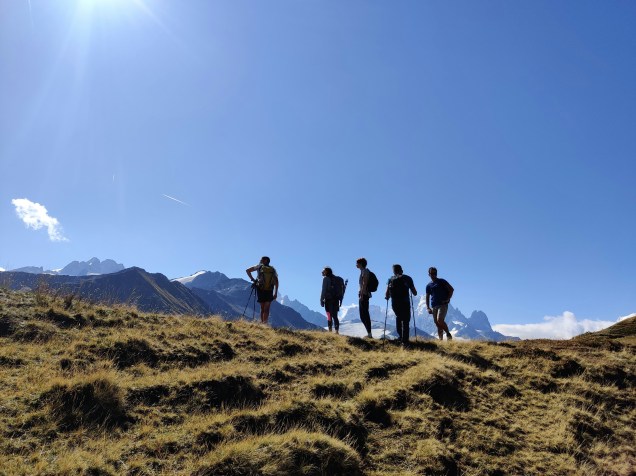
Because in the end, making knowledge matter isn’t a sprint. It’s more like a cross-country hike – with lots of unmarked territory, occasional detours, and frequent opportunities to stop and enjoy the view. But with every step, you (and your fellow wayfinders) are building a path others can follow.
Image credit: Photo by Akim Adigob on Unsplash
Dorte Caswell is a Professor of Social Work at Aalborg University, where she co-leads the Center for Local Innovation in Social and Employment Services (LISES.aau.dk). Dortes research focuses on the street-level policy implementation of active labour market policies and on knowledge mobilisation in public service organisations.
Tanja Dall is Associate Professor of Social Work at Aalborg University. Tanjas research focuses on social work around work inclusion and on knowledge mobilisation in public service organisations.
Read the original research in Evidence & Policy:
Caswell, D. & Dall, T. (2025). Structuring sustainable knowledge brokering in street-level organisations. Evidence & Policy, DOI: 10.1332/17442648Y2025D000000056.
If you enjoyed this blog post, you may also be interested in reading:
Personality and knowledge mobilisation: exploring individual differences among political elites
Disclaimer: The views and opinions expressed on this blog site are solely those of the original blog post authors and other contributors. These views and opinions do not necessarily represent those of the Policy Press and/or any/all contributors to this site.
 Evidence & Policy Blog