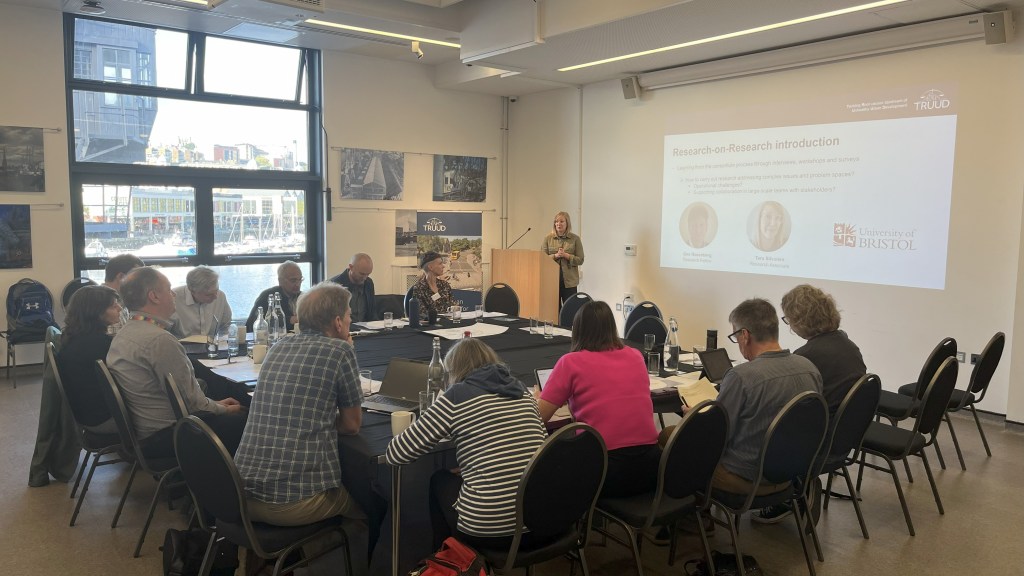
Taru Silvonen and Ges Rosenberg
This blog post is based on the Evidence & Policy article, ‘Optimising teamworking processes in an ongoing research consortium: a qualitative study’.
Considering collaboration is needed to solve complex societal problems, why are the structures that can help teams work together so often overlooked in research settings?
Complex research projects often require large teams with a wide range of expertise to work together. Working across disciplines and professional boundaries can be exciting but also comes with its own challenges, as shown by research in team science. These challenges are particularly present in transdisciplinary partnerships that aim to tackle evolving societal challenges, which makes our work relevant beyond academic teams. While interdisciplinary teams combine knowledge from different fields, transdisciplinary teams aim to create real-world change by involving both academic and non-academic partners. This provides opportunities for peer learning as well as bridging thinking between different perspectives. However, an appreciation of different ways of working, thinking, and communicating within a team will be required.
Our Evidence & Policy article shares insights from a UK-based research consortium called TRUUD (Tackling Root Causes Upstream of Unhealthy Urban Development), which focuses on creating healthier urban environments to reduce non-communicable diseases (NCDs) in the UK. TRUUD consists of 40+ academics in a transdisciplinary consortium, meaning it does not just combine academic disciplines – it also includes practitioners and stakeholders working together to solve real problems. Our qualitative study explores what helps large, complex teams work well together, especially in transdisciplinary (TD) settings, and how to overcome common challenges (i.e. building shared understanding and navigating conflict).
Continue reading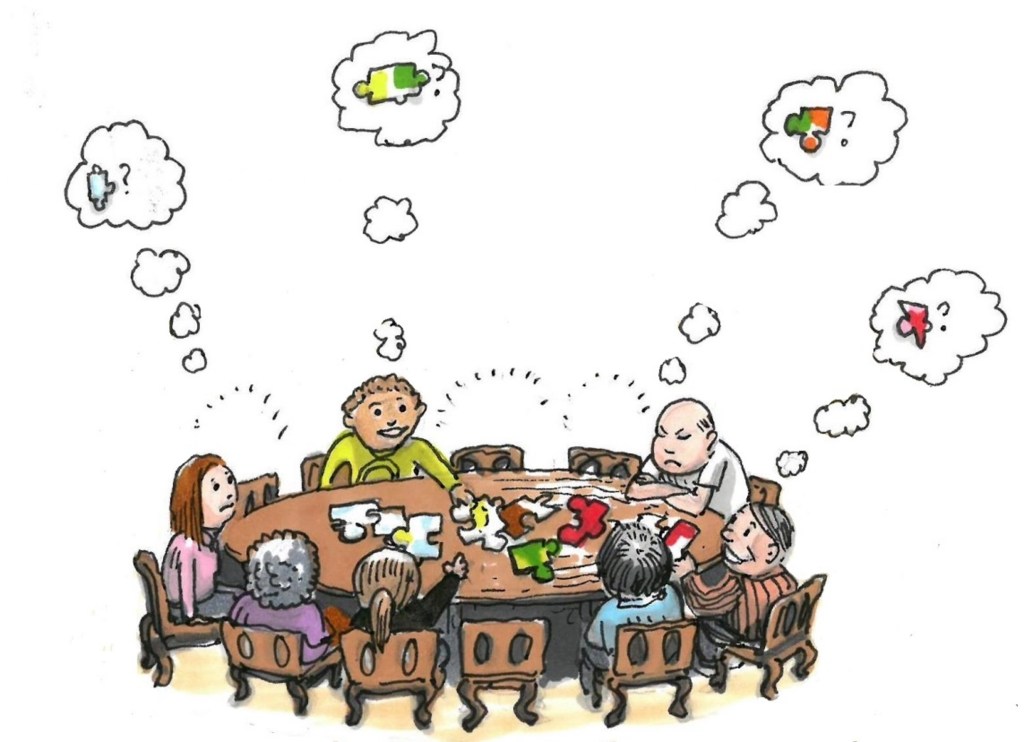
 Evidence & Policy Blog