Are there gendered trends in research authorship at Evidence & Policy?


William L. Allen, Associate Editor

Gender differences in academic publications: why it matters

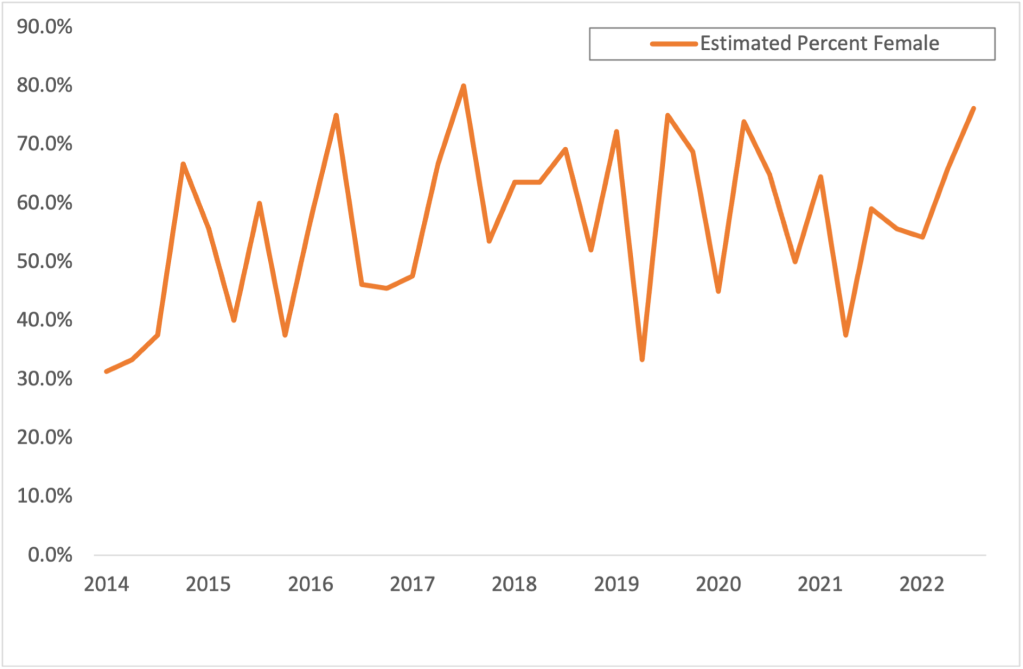
Across fields, there are concerns about the extent to which gender disparities exist in academic journal publications. Several studies of professional social science—including in economics, political science, and sociology—indicate women remain underrepresented in the pages of top journals. Inequalities in this regard may be particularly consequential because peer-reviewed publications remain one of the most important factors that contribute to success in applications for academic jobs, promotions, and grants.

While there are several reasons for this pattern, including authors’ perceptions of where their kinds of work are more likely to be favorably received, the simple fact of its presence has been enough motivation for some journal editorial teams to explicitly measure and report on the gender breakdown of both submissions and published work where possible.

Continue reading
Evidence informed ‘evidence informed policy and practice’


David Gough, Chris Maidment and Jonathan Sharples

This blog post is based on the Evidence & Policy article, ‘Enabling knowledge brokerage intermediaries to be evidence-informed.’

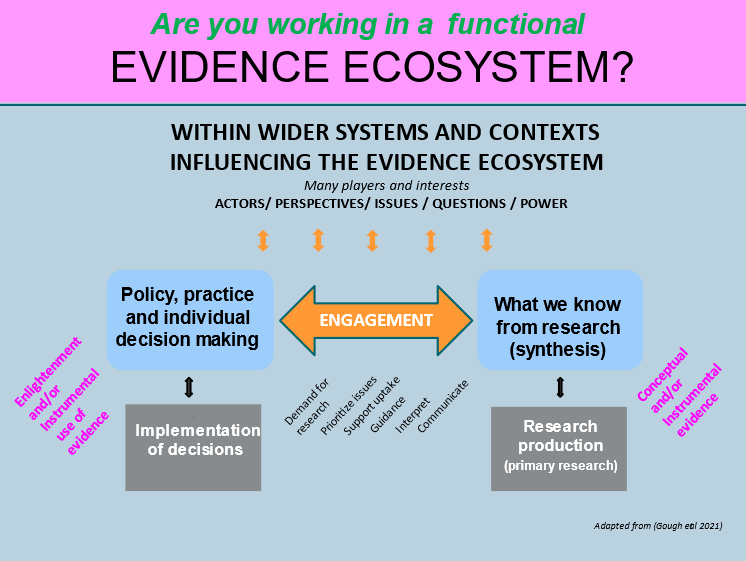
Research evidence can be useful (alongside lots of other information) in informing policy, practice and personal decision making. But does this always happen? It tends to be assumed that if research is available and relevant then it will be used in an effective self-correcting ‘evidence ecosystem’, but in many cases the ‘evidence ecosystem’ may be dysfunctional or not functioning at all. Potential users may not demand relevant evidence, not be aware of the existence of relevant research, or may misunderstand it use and relevance.

Knowledge brokerage intermediary (KBIs) agencies (such as knowledge clearinghouses and What Works Centre) aim to improve this by enabling the engagement between research use and research production. We believe that KBIs are essential innovations for improving research use. In this blog, we suggest four ways that they might be further developed by having a more overt focus on the extent that they themselves are evidence informed in their work, as we explore in our Evidence & Policy article.

Continue reading

The role of intermediaries in evidence-based policymaking: insights from the education system in Israel


Barak Ariel and Hagit Sabo-Brants

This blog post is based on the Evidence & Policy article, ‘Building bridges in place of barriers between school practitioners and researchers: on the role of embedded intermediaries in promoting evidence-based policy’.

The Israeli education system provides insights into the importance of intermediaries in evidence-based policymaking. Effective intermediaries can bridge the gap between research and practice by fostering collaboration and facilitating knowledge transfer between researchers, policymakers, and practitioners. The ideal intermediary should have the respect of both researchers and practitioners and a comprehensive understanding of both worlds. Practitioners should be involved in selecting and implementing intermediaries to meet their needs. Applying intermediaries in policymaking can result in more efficient and effective policies that benefit researchers and practitioners.

Continue reading

Portable peer review at Evidence & Policy


Zachary Neal, Editor-in-Chief

Evidence & Policy is piloting a new portable peer review policy aimed at reducing inefficiencies in the publication process, and lessening some of the burdens placed on reviewers and authors by the cycle of repeated submissions to different journals. The official policy is available in the journal’s Author Instructions, but this blog post provides some additional background details and rationale for adopting this policy.

Continue reading

Local organisations and researchers can play a key role as intermediaries in municipal policymaking for improving community health


Renee Parks and Fanice Thomas

This blog post is based on the Evidence & Policy article, ‘Municipal officials’ perspectives on policymaking for addressing obesity and health equity’.

More than 30% of adults in the US have obesity, with higher rates among those who have lower incomes or are racially or ethnically minoritised. Local-level policymakers within municipal governments can play a unique role in addressing obesity and related health disparities through policy strategies, including zoning and other land use laws, city or park master plans, and local, healthy food procurement policies that create healthy environments and promote community members’ engagement in health promoting behaviours.

In our Evidence and Policy article, we discuss municipal officials’ decision-making regarding policies impacting community health, their views on the prevalence of obesity and health disparities in their communities, and their role in addressing them. By understanding policymakers’ views on obesity and health disparities, we can identify best practices for sharing evidence with policymakers and promoting its integration into policies that address health disparities in communities.

Continue reading

What does it mean to use research well?

Joanne Gleeson, Lucas Walsh, Mark Rickinson, Blake Cutler and Genevieve Hall

This blog post is based on the Evidence & Policy article, ‘Quality use of research evidence: practitioner perspectives’.

The use of research to inform practice can play a vital role in improving decision-making and social outcomes. As such, research use has gained widespread attention, with a range of initiatives now in place across sectors, countries and jurisdictions that promote it. Yet, what it takes for research to be used on the ground, let alone what quality research use looks like, is not well understood (Sheldrick et al., 2022). Without these understandings, there are real risks that research into research use will stay, as Tseng (2022) suggests, on ‘the proverbial shelf (or website) — far from the action of policy deliberations and decision-making’. This presents a challenge to the research community; to not only gain robust evidence on how research is used by practitioners, but also what it means to use research well and what it takes for it to improve.

In our new article in Evidence and Policy, we address this challenge by presenting findings from an investigation into Australian educators’ views on using research well in practice. Utilising thematic analysis, we draw on survey and interview data from almost 500 Australian educators (i.e., school leaders, teachers and support staff) to examine their perspectives in relation to a previously developed conceptual Quality Use of Research Evidence (QURE) Framework (Rickinson et al., 2020, 2022).

Continue reading

When should scientists rock the boat? Advising government in a pandemic

Paul Atkinson

This blog post is based on the Evidence & Policy article, How did UK policymaking in the COVID-19 response use science? Evidence from scientific advisers’.

Should scientists who want to influence government ‘speak truth to power’, or follow the ‘rules of the game’? Do you make more difference as an outsider or an insider? This matters to any scientist who wants their research findings to have impact. As a former Department of Health civil servant employed in a University public health department, I often work with my Liverpool and Oxford colleagues on achieving ‘policy impact’, and this question arises each time, but it has never mattered more than in the Covid-19 pandemic. So what is the best way to influence government?

Continue reading

How to co-create in research and innovation for societal challenges

Carla Alvial Palavicino and Cristian Matti

This blog post is based on the Evidence & Policy article, ‘Co-creation for Transformative Innovation Policy: an implementation case for projects structured as portfolio of knowledge services’.

For addressing grand societal challenges such as climate change or biodiversity loss, the power of research and innovation is an important consideration. In this context, a new framework has emerged that invites us to re-think how we can maximise the impact of research and innovation for societal challenges: ‘Transformative Innovation Policy’ or TIP. This framework emphasises the role of co-creation, learning and reflexivity as part of research, technology development and innovation processes.

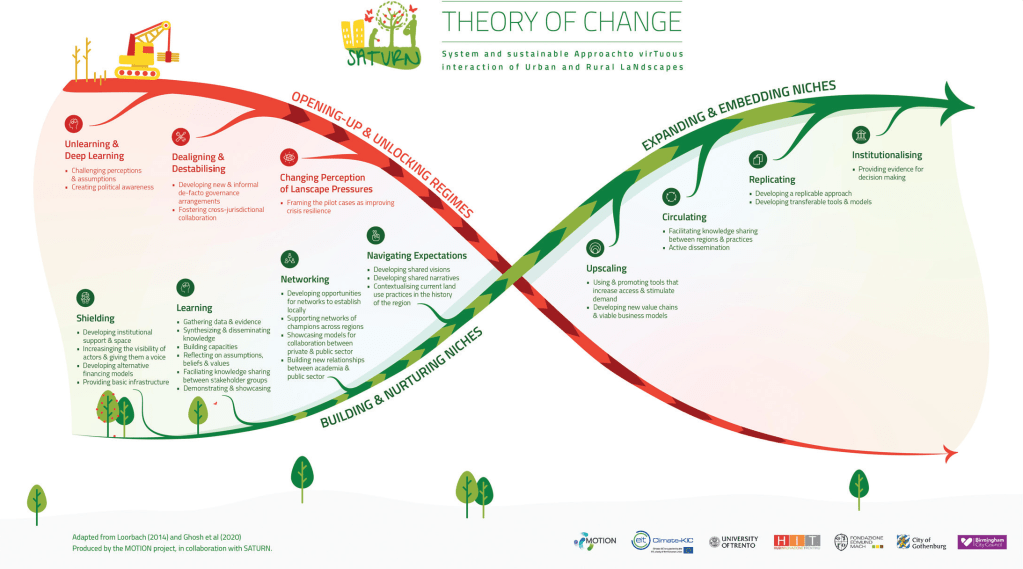
Our Evidence & Policy article, ‘Co-creation for Transformative Innovation Policy: an implementation case for projects structured as portfolio of knowledge services’, explores what co-creation means in practice for TIP, using the case of two innovation projects developed by the TIP consortium and EIT Climate-KIC, two international organisations seeking to promote innovation for global challenges. These projects were co-developed between experts on transformative innovation policy from the organisations previously mentioned, and scientific researchers and consultants grouped in two consortiums: one focused on sustainable mobility solutions (SuSMo) and the other focused on sustainable landscape management (SATURN). These projects have aimed at creating new knowledge that can be used by societal stakeholders in addressing specific sustainability problems and developing a ‘portfolio’ of knowledge services.

Continue reading

Considerations for conducting consensus in partnered research

Kelsey Wuerstl, Miranda A. Cary, Katrina Plamondon, Davina Banner-Lukaris, Nelly Oelke, Kathryn M. Sibley, Kristy Baxter, Mathew Vis-Dunbar, Alison M. Hoens, Ursula Wick, Stefan Bigsby and Heather Gainforth

This blog post is based on the Evidence & Policy article, ‘Building consensus in research partnerships: a scoping review of consensus methods’.

When reading articles describing a collaborative research decision, such as a research partnership creating a list of research priorities, we often read the statement, ‘The research partnership came to consensus’. But what does this statement actually mean – what is consensus, what does it mean to come to consensus, and how did the research partnership come to consensus?

Research partnerships are characterised by researchers and research users engaged in a collaborative research project to enhance the relevance and usefulness of research findings. Consensus methods require group members to develop and agree to support a solution that is in the group’s best interest. However, simply doing partnered research and using consensus methods does not guarantee the research addresses the priorities of those most affected, nor that inclusion and power dynamics have been considered. Consensus methods are often poorly reported and missing crucial information about how the research partnership made decisions about the project, as well as how issues of inclusion, equity and power dynamics were navigated.

We conducted a scoping review to better understand how research partnerships use consensus methods in health research and how these research partnerships navigate inclusion and power dynamics. Our findings, published in Evidence & Policy, identified six recommendations to enhance the quality of research teams’ consensus methods.

Continue reading

How do contextual factors influence the development of e-cigarette recommendations?

Marissa J. Smith, Srinivasa Vittal Katikireddi, Kathryn Skivington and Shona Hilton

This blog post is based on the Evidence & Policy article, ‘Contextual influences on the role of evidence in e-cigarette recommendations: a multi-method analysis of international and national jurisdictions’.

The use of evidence in public health decision-making is not as straightforward as it may seem – people have different ideas of what constitutes ‘evidence’, and how it should be interpreted and used in different contexts. Even when there is agreement on what constitutes evidence, research has shown that the same evidence, used in different contexts can lead to different policy decisions. A current example of this is e-cigarette policies and their recommendations. Our Evidence and Policy article explores how context, broadly defined as the factors that influence decision-making, influences the role of evidence in developing recommendations and how it may contribute to different policy approaches.

Continue reading