The challenge of sowing seeds of academic-policy engagement


Petra Mäkelä, Annette Boaz and Kathryn Oliver

This blog post is based on the Evidence & Policy article, The Capabilities in Academic Policy Engagement (CAPE) programme in England: a mixed methods evaluation.

“[M]ore is not the moral equivalent of better.”
Weiss 1979, p. 456

Ambitions for evidence-informed policymaking have led to a rise in knowledge-brokering initiatives between researcher and policy communities, propelling the development of a ‘rudderless mass’ of engagement activities. For researchers or policy professionals without pre-existing contacts or networks for academic-policy engagement, it can be difficult to know where to start. 

In our Evidence and Policy article, we report on a mixed methods evaluation of a programme known as Capabilities in Academic Policy Engagement (CAPE). CAPE operated as an academically-driven model, which generated an increase in engagement activities reacting to policy opportunities. Our article adds to the limited work that has empirically tested strategies for academic-policy engagement and their facilitation, to provide insights into their qualities and challenges.

Continue reading


Functional dialogues: guiding vaccination policy during COVID-19 through direct knowledge transfer


Katie Attwell, Tauel Harper and Chris Blyth

This blog post is based on the Evidence & Policy article, ‘Facilitating knowledge transfer during Australia’s COVID-19 vaccine rollout: an examination of ‘Functional Dialogues’ as an approach to bridge the evidence–policy gap’.

When the COVID-19 pandemic hit, we wanted to use our skills to help with the eventual vaccine rollout. Chris was already well-placed to do so. As Chair of Australia’s Technical Advisory Group on Immunisation (ATAGI), he had years of experience in aspects of vaccine policymaking. Katie was an emerging leader in vaccination social science and policy, and, like Chris, she had strong connections in the Western Australian Department of Health. They knew that the team focused on administering Australia’s National Immunisation Program would have their hands full with supporting the existing programme during COVID-19 times. How could they also prepare for a pandemic vaccine rollout?

Continue reading

Breaking the Overton Window: on the need for adversarial co-production


Matthew Johnson, Elliott Johnson, Irene Hardill and Daniel Nettle

This blog post is based on the Evidence & Policy article, ‘Breaking the Overton Window: on the need for adversarial co-production’

Co-production has emerged as one of the key concepts in understanding knowledge-policy interactions and is associated with involvement of users of public services in their design and delivery. At a time of permacrisis, in which ever increasing numbers of Britons are exposed to financial insecurity, the need for transformative evidence-based policymaking is urgent and great. This is particularly important in highly distressed ‘left-behind’ communities targeted by the UK Government for Levelling Up, which constitutes an attempt to improve the infrastructural, economic, social and health environments of less affluent parts of the UK.

Often, policymakers regard the transformative policies capable of addressing these crises as beyond the ‘Overton Window’, which describes a range of policies in the political centre that are acceptable to the public. This window of opportunity can shift to encompass different policies, but movement is slow and policymakers generally believe that significant change lies outside it. This creates an Overton Window-based roadblock in evidence-based policymaking.

Continue reading

How to do knowledge mobilisation? What we know, and what we don’t


Hannah Durrant, Rosie Havers, James Downe and Steve Martin

This blog post is based on the Evidence & Policy article, ‘Improving evidence use: a systematic scoping review of local models of knowledge mobilisation’.

Knowledge mobilisation (KM) describes a process for enabling the use of research evidence in policymaking and public service design and delivery. Approaches to KM have evolved over the last two decades – away from one-directional efforts to push research out to decision makers towards a kaleidoscope of research-policy-practice engagement across overlapping phases of knowledge production and policy action. These processes are generally poorly understood at local levels of decision-making, where the specificities of policy and public service context can undermine generic ‘what works’ claims.

Our recent Evidence & Policy article, ‘Improving evidence use: a systematic scoping review of local models of knowledge mobilisation’, identifies three key features of local KM as well as highlighting the gaps in our understanding of how KM is done and with what effect. 

Our aim was to determine how KM is done ‘on-the-ground’, which can get obscured in frameworks that emphasise complexity while simplifying process. We argue that more detail is needed on these practices of KM to inform and improve process. Equally, attention is also needed on demand for and impact of evidence on policy and practice decisions.

Continue reading

We need a balanced approach to research ethics if we want our research to help everyone


Michael Sanders and Vanessa Hirneis

This blog post is based on the Evidence & Policy article, ‘Consent, assent and randomised evaluations.

The last decade or so have seen an explosion in the number of randomised controlled trials conducted in schools in the UK, and a similar, if less stratospheric, rise elsewhere in the world. The rise in the UK can be attributed in large part not to methodological interest by education academics, but the creation of the Education Endowment Foundation. Forming part of the UK Government’s “What Works” network aimed at improving evidence-informed decision-making in policy and overseeing a budget of more than £100 million, the EEF has funded hundreds of randomised trials of different interventions to boost children’s and young people’s attainment.

Enthusiasts of randomised trials argue that they provide the best and simplest (or least statistically burdensome) way of findings out which interventions work. However, opponents, often those responsible for designing and delivering interventions, consider them unethical because they necessitate withholding a potentially beneficial intervention from young people. In our paper, we consider another aspect of the ethics of randomised trials with young people – consent.

Informed consent is the cornerstone of postwar research, and aims to ensure that people are not experimented on against their will. As a principle, it is hard to argue with and should be at the centre of our thinking about how to run these kinds of trials.

Continue reading

Naturopaths place a stronger emphasis on the patient’s experience of their health compared to information from other health professionals when making clinical decisions


Prof Amie Steel, Dr Iva Lloyd, Prof Matthew Leach and Dr Vicky Ward

This blog post is based on the Evidence & Policy article, ‘Naturopaths’ behaviours, attitudes and perceptions towards the use of knowledge and information sources’.

The modern health landscape is dominated by the evidence-based practice paradigm which asks health professionals to prefer research evidence over other forms of knowledge and information when providing care to their patients. However, clinicians from most areas of health – including general practice and allied health – have argued that the realities of practice are not so simple. While this ‘messiness’ of clinical practice is documented for many mainstream health professions, there has been little to no research examining how clinicians from traditional medicine systems use knowledge and information in their practice, until now.

An international survey of naturopaths was recently published in Evidence and Policy which found they used a diverse range of knowledge and information sources when making clinical decisions. The survey respondents practice naturopathy, a traditional medicine system originating from Europe but now practiced in 108 countries across all world regions. Naturopathy uses a highly patient-centred and holistic clinical approach that prioritises preventive health and wellness, and patient education and empowerment.

Continue reading

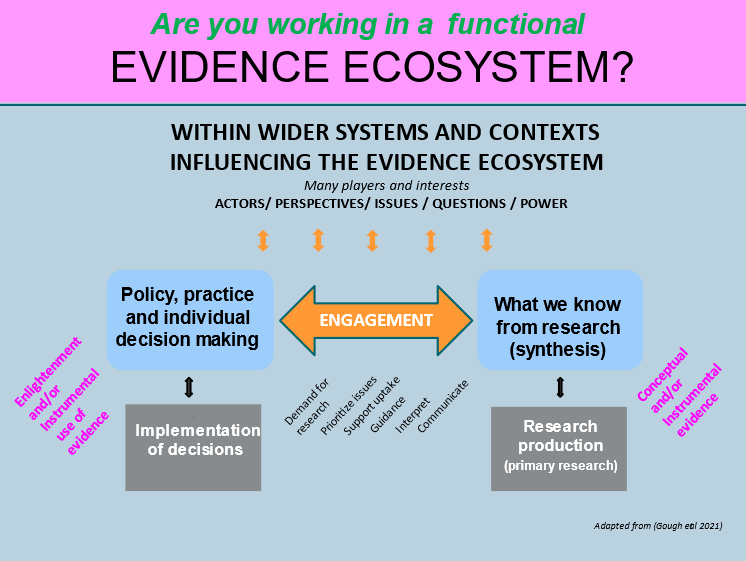
Evidence informed ‘evidence informed policy and practice’


David Gough, Chris Maidment and Jonathan Sharples

This blog post is based on the Evidence & Policy article, ‘Enabling knowledge brokerage intermediaries to be evidence-informed.’

Research evidence can be useful (alongside lots of other information) in informing policy, practice and personal decision making. But does this always happen? It tends to be assumed that if research is available and relevant then it will be used in an effective self-correcting ‘evidence ecosystem’, but in many cases the ‘evidence ecosystem’ may be dysfunctional or not functioning at all. Potential users may not demand relevant evidence, not be aware of the existence of relevant research, or may misunderstand it use and relevance.

Knowledge brokerage intermediary (KBIs) agencies (such as knowledge clearinghouses and What Works Centre) aim to improve this by enabling the engagement between research use and research production. We believe that KBIs are essential innovations for improving research use. In this blog, we suggest four ways that they might be further developed by having a more overt focus on the extent that they themselves are evidence informed in their work, as we explore in our Evidence & Policy article.

Continue reading

The role of intermediaries in evidence-based policymaking: insights from the education system in Israel


Barak Ariel and Hagit Sabo-Brants

This blog post is based on the Evidence & Policy article, ‘Building bridges in place of barriers between school practitioners and researchers: on the role of embedded intermediaries in promoting evidence-based policy’.

The Israeli education system provides insights into the importance of intermediaries in evidence-based policymaking. Effective intermediaries can bridge the gap between research and practice by fostering collaboration and facilitating knowledge transfer between researchers, policymakers, and practitioners. The ideal intermediary should have the respect of both researchers and practitioners and a comprehensive understanding of both worlds. Practitioners should be involved in selecting and implementing intermediaries to meet their needs. Applying intermediaries in policymaking can result in more efficient and effective policies that benefit researchers and practitioners.

Continue reading

How to co-create in research and innovation for societal challenges

Carla Alvial Palavicino and Cristian Matti

This blog post is based on the Evidence & Policy article, ‘Co-creation for Transformative Innovation Policy: an implementation case for projects structured as portfolio of knowledge services’.

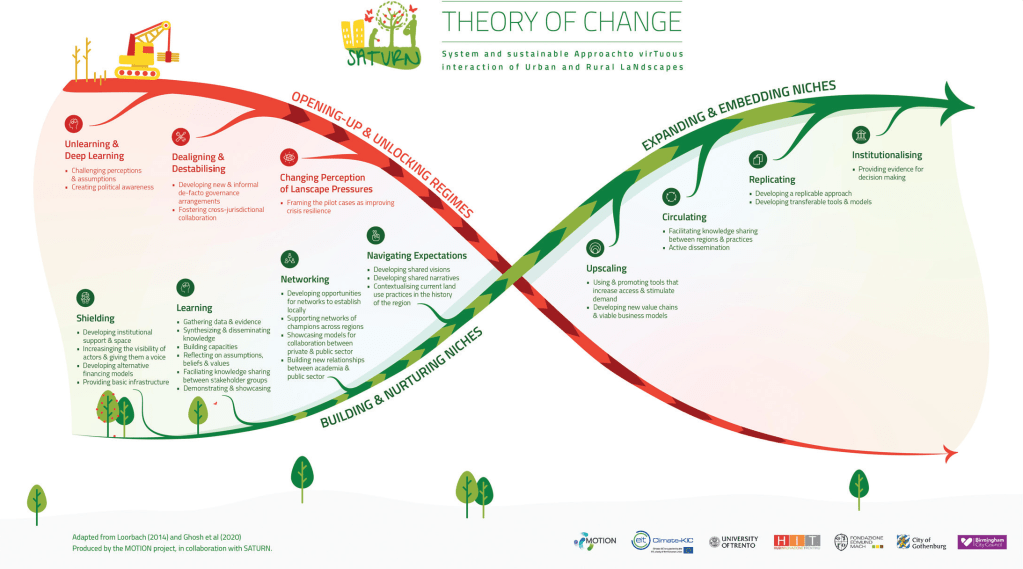
For addressing grand societal challenges such as climate change or biodiversity loss, the power of research and innovation is an important consideration. In this context, a new framework has emerged that invites us to re-think how we can maximise the impact of research and innovation for societal challenges: ‘Transformative Innovation Policy’ or TIP. This framework emphasises the role of co-creation, learning and reflexivity as part of research, technology development and innovation processes.

Our Evidence & Policy article, ‘Co-creation for Transformative Innovation Policy: an implementation case for projects structured as portfolio of knowledge services’, explores what co-creation means in practice for TIP, using the case of two innovation projects developed by the TIP consortium and EIT Climate-KIC, two international organisations seeking to promote innovation for global challenges. These projects were co-developed between experts on transformative innovation policy from the organisations previously mentioned, and scientific researchers and consultants grouped in two consortiums: one focused on sustainable mobility solutions (SuSMo) and the other focused on sustainable landscape management (SATURN). These projects have aimed at creating new knowledge that can be used by societal stakeholders in addressing specific sustainability problems and developing a ‘portfolio’ of knowledge services.

Continue reading

Entrepreneurial thinking: achieving policy impact

Matthew Flinders

This blog post is based on the Evidence & Policy article, ‘Entrepreneurial thinking: the politics and practice of policy impact’.

In a recent article in Evidence and Policy Steve Johnson suggests that entrepreneurship research may have had far more impact on society than it is generally credited with. In making this point Johnson stimulates a debate not just about the past, present and future of entrepreneurship research but about the science-society nexus more generally. In a commentary in Evidence and Policy I responded to Johnson’s argument through a focus on evidential standards and criticality.

When stripped down to its core thesis, Johnson’s argument is that entrepreneurship research may have had a number of non-academic and broadly positive impacts on society. The slight problem is that this claim relies upon enlightenment arguments about affecting public debate and shaping ideas that are incredibly hard to demonstrate or measure in a tangible manner. There are, of course, some academic studies that can claim and prove that they have shaped public discourse and affected public policy – the recent insights of behavioural economics and ‘nudge theory’ provide a good example – but such examples tend to be rare.

Continue reading