Evidence & Policy Call for Papers – Exploring the Role of Youth-led Research in Policy Change

Special Issue Editors: Mariah Kornbluh and Jennifer Renick

“It is a fundamental right of youth and young adults to participate in designing the programs and policies aiming to serve them.” (United Nations, 1989).

In recent years, there have been growing calls for the ‘democratization’ of research evidence, which argues for broadening the kinds of evidence that is considered legitimate in informing practice and policy (Doucet, 2019; Kirkland, 2019; Wegemer & Renick, 2021). Within youth-led participatory action research (YPAR), youth conduct systematic research and generate evidence to draw on to advocate for policy and/or programmatic changes (Kornbluh, 2023; Ozer et al., 2020). Such an approach aligns with the push for the democratization of evidence in broadening who are considered legitimate producers of knowledge (Fine & Torre, 2021; Ozer et al., 2020).

This special issue will explore the intersections between the use of research evidence to inform policy and YPAR, with the broad goals of studying and strengthening models for impact. In this special issue, we seek scholarship in theoretical frameworks, methodologies, presentations, and case studies that embrace YPAR as a vehicle for youth-led policy change. 

Submission for this issue might address the following topics:

  • Descriptive case studies of YPAR informing (or attempting to push for) policy change 
  • Theoretical models and approaches to YPAR-initiated policy change
  • An examination of the role of power and politics in relation to youth-led policy change
  • Examples of strategizing for scaling-up action from YPAR projects into policy change
  • Practices or procedures for addressing adultism and/or preparing adults to accept and implement youth-led policy change
  • Empirical explorations of the impact of YPAR-initiated policy change 

We imagine this special issue to function as a way to explore the research to practice gap within policy change, and whose perspectives are missing. Furthermore, we hope this issue will highlight ways in which policy makers can more critically accept or invite the voices of young people. 

Deadline: Interested authors should send a 300-word abstract to Special Issue Editors Dr Mariah Kornbluh at the University of Oregon (mkornbl2@uoregon.edu) and Dr Jennifer Renick at the University of Memphis (jrenick@memphis.edu) by 30 November 2024. Invitations for full paper submissions will be sent in mid-January, and full papers will be due by end of May 2025.


Evidence & Policy Call for Papers – Special Issue on Research (Mis)use and Mis/Disinformation in and around Education

Special Issue Editors: Joel Malin and Chris Lubienski

Mis- and dis-information are growing problems world-wide, corrupting trust and engagement in consumer markets, media, politics, and other institutions. This issue is particularly concerning for research-driven areas that involve public policy. Education is a prime area. Not only do education policymakers seek ‘research-based’ policy, but schools themselves, while subjected to false information campaigns, are also uniquely suited as institutions that have the capacity to counter misinformation by providing fact-based learning and critical thinking skills.

Continue reading

Are evidence-based policy and democratic equality reconcilable?


Tine Hindkjaer Madsen

This blog post is based on the Evidence & Policy article, ‘Reconciling science and democracy: evidence-based policy as seen from the perspective of a role-based democratic theory’.

For policy to be effective, it must be informed by reliable evidence, proponents of evidence-based policy argue. While this may be true, the evidence-based policy ideal nevertheless also conflicts with the requirements of democracy. This is because political equality is an essential element of democracy and evidence-based policy confers superior political influence on those who supply the evidence relative to ordinary citizens.

In my paper recently published in Evidence & Policy, I reflect on whether the evidence-based policy ideal is reconcilable with democratic equality after all. I first argue that evidence-based policy in fact also advances the value of political equality, because political equality requires that citizens be the choosers of political aims and utilising appropriate, high-quality evidence is the most reliable method of identifying how to achieve citizens’ aims. That is of course not to say that utilising appropriate, high-quality evidence will always lead to true beliefs about how to achieve a political aim, but it is the body of information we have that is most likely to be true and therefore utilising appropriate, high-quality evidence makes it more likely that citizens’ aims be realised. 

Continue reading

Everybody can claim that a practice or policy is evidence-based. But when is it justified to do so?


Christian Gade

This blog post is based on the Evidence & Policy article, ‘When is it justified to claim that a practice or policy is evidence-based? Reflections on evidence and preferences’.

When you search the internet, you will find a myriad of claims about different practices or policies being evidence-based. To avoid ‘evidence-based’ becoming merely a buzzword that everyone can throw around and use whenever they deem it suitable, it is important to consider the conditions for when it is justified for you as an individual or organisation to claim that your practice or policy is evidence-based.

My argument is that this is the case if, and only if, three conditions are met – an argument that suggests that it depends on subjective preferences whether you are justified in claiming that your practice or policy is evidence-based, and that it is important to give more attention to the normative dimension of the field of evidence-based practice and policy.

Continue reading

Evidence & Policy Call for Papers – Special Issue on Learning through Comparison

Special Issue Editors: Katherine Smith, Valerie Pattyn and Niklas Andersen

Evidence & Policy is pleased to invite abstracts for papers that explicitly employ comparative analysis and/or that develop insights about evidence use in policy through comparison. Authors of selected abstracts will be invited to submit a full paper for consideration for inclusion in a special issue that is aiming to demonstrate the conceptual and empirical contribution that comparative research can offer scholarship on evidence and policy.

Continue reading

What can we learn from local government research systems?


Andrew Booth, Emma Hock and Alison Scope

This blog post is based on the Evidence & Policy article, ‘Examining research systems and models for local government: a systematic review’.

Local government has been unfairly characterised as a black hole when it comes to getting evidence into practice. While it is true that work remains to be done to cultivate interest in research across local government, our recent review found plenty of evidence of academia, local officials and other partners collaborating to make a difference around the generation and use of locally-meaningful research.  

What seems to be less common, however, are coordinated approaches to organising research activity within and across an entire local government system. What can we learn from diverse approaches that harness mechanisms across different local government systems?

Continue reading

What knowledge informs policy decisions? And how can we measure it?


Jonas Videbæk Jørgensen

This blog post is based on the Evidence & Policy article, ‘Knowledge Utilisation Analysis: measuring the utilisation of knowledge sources in policy decisions.

Using research-based knowledge to inform policy decisions constitutes a key ambition in most modern democracies. As such, enhancing the utilisation and impact of research has gained widespread attention among scholars and policymakers, with a range of initiatives to promote it. But how often is research-based knowledge used in policy decisions? And what kinds of knowledge have the strongest impact? Despite years of scholarship on the topic, measuring knowledge utilisation remains a significant challenge. In a new Evidence & Policy article, I discuss existing measures of knowledge utilisation and present a new approach called ‘Knowledge Utilisation Analysis’ (KUA).

Continue reading

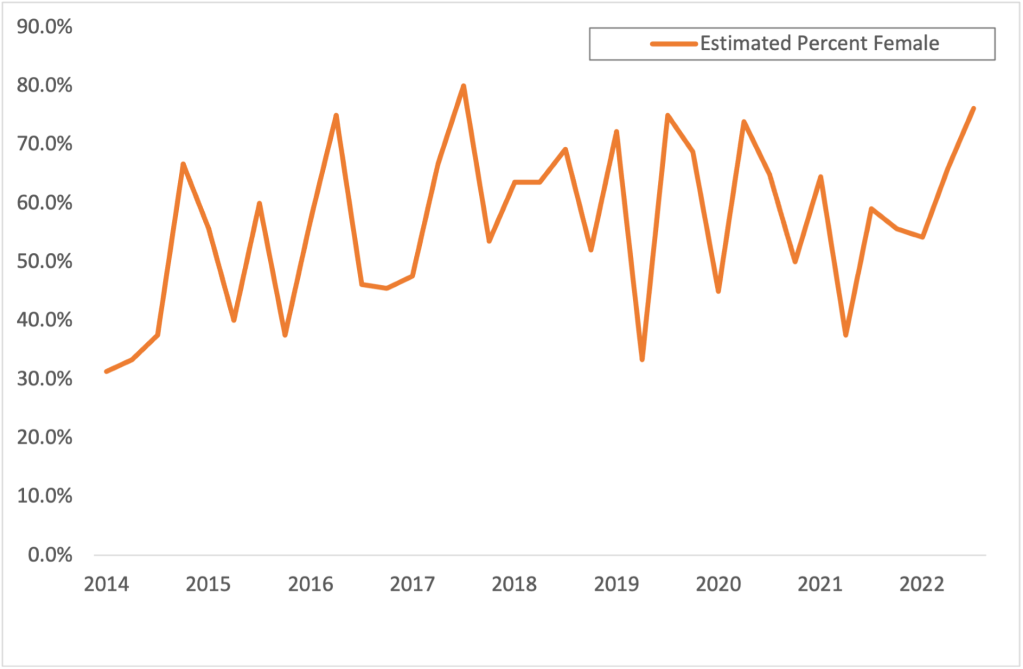
Are there gendered trends in research authorship at Evidence & Policy?


William L. Allen, Associate Editor

Gender differences in academic publications: why it matters

Across fields, there are concerns about the extent to which gender disparities exist in academic journal publications. Several studies of professional social science—including in economics, political science, and sociology—indicate women remain underrepresented in the pages of top journals. Inequalities in this regard may be particularly consequential because peer-reviewed publications remain one of the most important factors that contribute to success in applications for academic jobs, promotions, and grants.

While there are several reasons for this pattern, including authors’ perceptions of where their kinds of work are more likely to be favorably received, the simple fact of its presence has been enough motivation for some journal editorial teams to explicitly measure and report on the gender breakdown of both submissions and published work where possible.

Continue reading

Portable peer review at Evidence & Policy


Zachary Neal, Editor-in-Chief

Evidence & Policy is piloting a new portable peer review policy aimed at reducing inefficiencies in the publication process, and lessening some of the burdens placed on reviewers and authors by the cycle of repeated submissions to different journals. The official policy is available in the journal’s Author Instructions, but this blog post provides some additional background details and rationale for adopting this policy.

Continue reading

What does it mean to use research well?

Joanne Gleeson, Lucas Walsh, Mark Rickinson, Blake Cutler and Genevieve Hall

This blog post is based on the Evidence & Policy article, ‘Quality use of research evidence: practitioner perspectives’.

The use of research to inform practice can play a vital role in improving decision-making and social outcomes. As such, research use has gained widespread attention, with a range of initiatives now in place across sectors, countries and jurisdictions that promote it. Yet, what it takes for research to be used on the ground, let alone what quality research use looks like, is not well understood (Sheldrick et al., 2022). Without these understandings, there are real risks that research into research use will stay, as Tseng (2022) suggests, on ‘the proverbial shelf (or website) — far from the action of policy deliberations and decision-making’. This presents a challenge to the research community; to not only gain robust evidence on how research is used by practitioners, but also what it means to use research well and what it takes for it to improve.

In our new article in Evidence and Policy, we address this challenge by presenting findings from an investigation into Australian educators’ views on using research well in practice. Utilising thematic analysis, we draw on survey and interview data from almost 500 Australian educators (i.e., school leaders, teachers and support staff) to examine their perspectives in relation to a previously developed conceptual Quality Use of Research Evidence (QURE) Framework (Rickinson et al., 2020, 2022).

Continue reading