When it comes to furthering the reach of scientific evidence in policymaking processes, a large body of research has shown just how crucial personal relationships between researchers and policymakers can be. These personal relationships can help offset the overloading workload of policymakers and their staffers, especially considering they often rely on trusted sources for advice and information. However, there are often group norms, systemic differences, and other obstacles standing in the way of relationships between policymakers and researchers initially forming.
Equity, Equality, Diversity and Inclusion (EDI)[1] in the world of Higher Education, public policy and everything in between has received increasing attention over the past few years especially. Within academic-policy engagement specifically, key actors have identified the need to diversify participation and knowledges (Morris et al, 2021; Hopkins et al, 2021; Walker et al, 2019). Additionally, Oliver et al (2022) reported that there is currently a ‘busy but rudderless mass of activity’ within knowledge mobilisation, and called for further practice that is informed by ‘existing evidence and theory’ (694). Notwithstanding the high level of activity, a gap in understanding what EDI in the context of academic-policy engagement really means still exists. Alongside this, there is a gap in understanding and knowing how EDI is understood and experienced by knowledge brokers, how university knowledge brokers drive it, and what strategies are being used to ensure EDI is embedded within academic-policy engagement activities (and what it even means to do this!).
Knowledge brokering is often presented as a way of ensuring that evidence reaches government departments, but we have little understanding of what happens next. Our research shows that some civil servants can also act as internal knowledge brokers between evidence and policy. This raises important questions for how we understand processes of evidence-informed policymaking.
Working across sectoral boundaries offers exciting prospects for academics and municipal policymakers to develop innovative solutions to local issues through exploring shared concerns from their distinct professional perspectives. Yet organisational boundaries present well-recognised impediments to research-policy interaction. Drawing on findings from a Review of Collaboration between academics and local government officers in Leeds, we propose that active cultivation of civic ‘communities of practice’ offers a promising approach for connecting research evidence with social, environmental and economic challenges that confront local authorities and their citizens.
Crucially, we argue that boundary crossing relationships between professionals are key facilitators of effective civic collaboration that need to be nurtured and supported organisationally. This means putting inter-sectoral mechanisms in place that help ‘bridge’ institutional divides, without stifling the enthusiasm and dynamism that underpins meaningful knowledge exchange.
Special Issue Editors: Mariah Kornbluh and Jennifer Renick
“It is a fundamental right of youth and young adults to participate in designing the programs and policies aiming to serve them.” (United Nations, 1989).
In recent years, there have been growing calls for the ‘democratization’ of research evidence, which argues for broadening the kinds of evidence that is considered legitimate in informing practice and policy (Doucet, 2019; Kirkland, 2019; Wegemer & Renick, 2021). Within youth-led participatory action research (YPAR), youth conduct systematic research and generate evidence to draw on to advocate for policy and/or programmatic changes (Kornbluh, 2023; Ozer et al., 2020). Such an approach aligns with the push for the democratization of evidence in broadening who are considered legitimate producers of knowledge (Fine & Torre, 2021; Ozer et al., 2020).
This special issue will explore the intersections between the use of research evidence to inform policy and YPAR, with the broad goals of studying and strengthening models for impact. In this special issue, we seek scholarship in theoretical frameworks, methodologies, presentations, and case studies that embrace YPAR as a vehicle for youth-led policy change.
Submission for this issue might address the following topics:
Descriptive case studies of YPAR informing (or attempting to push for) policy change
Theoretical models and approaches to YPAR-initiated policy change
An examination of the role of power and politics in relation to youth-led policy change
Examples of strategizing for scaling-up action from YPAR projects into policy change
Practices or procedures for addressing adultism and/or preparing adults to accept and implement youth-led policy change
Empirical explorations of the impact of YPAR-initiated policy change
We imagine this special issue to function as a way to explore the research to practice gap within policy change, and whose perspectives are missing. Furthermore, we hope this issue will highlight ways in which policy makers can more critically accept or invite the voices of young people.
Deadline: Interested authors should send a 300-word abstract to Special Issue Editors Dr Mariah Kornbluh at the University of Oregon (mkornbl2@uoregon.edu) and Dr Jennifer Renick at the University of Memphis (jrenick@memphis.edu) by 30 November 2024. Invitations for full paper submissions will be sent in mid-January, and full papers will be due by end of May 2025.
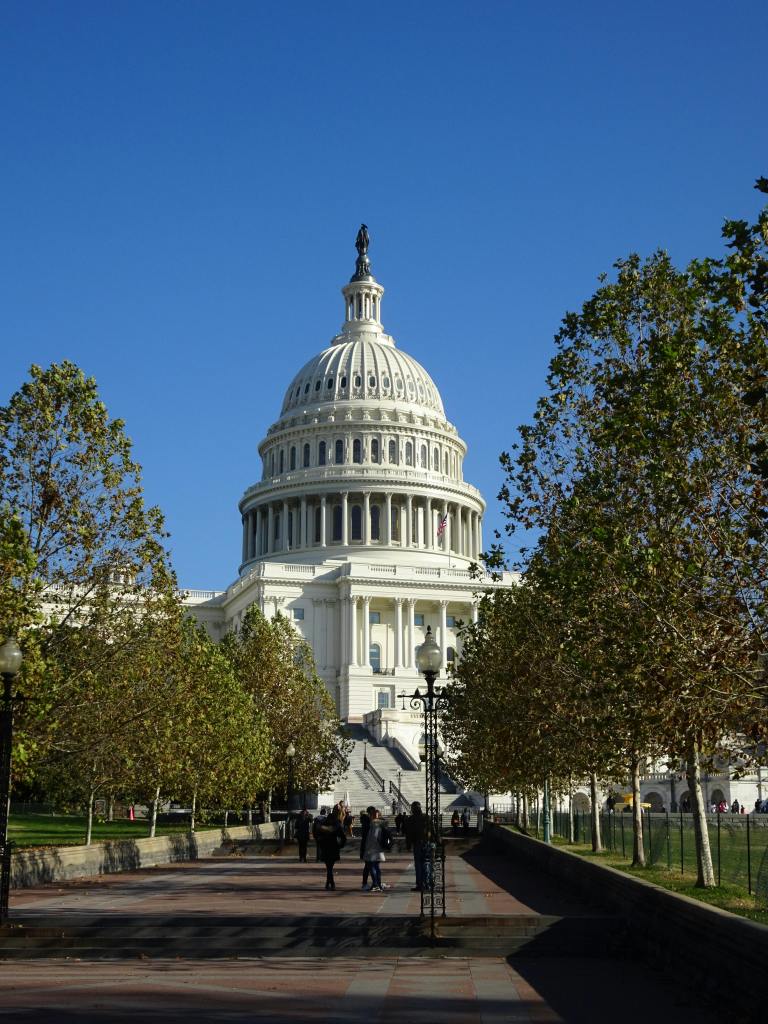
On 6th January 2021, thousands of people descended upon the US Capitol to disrupt the counting of electoral votes in the US presidential election. Televised acts of physical violence were broadcast across the nation and many children were watching. Within hours of the attack, educators were ‘floundering’, trying to figure out if and how they would discuss what happened with their students the next day. Take for example, a Social Studies Subject Coordinator in Florida:
Kids come into school looking for answers. What does that mean? I’m like, ‘alright, what do we got?’ Because teachers were going to come to me, and I feel it was important that as a district person, we provide support. My superintendent said, ‘we’re not mentioning it.’ I was like, ‘We gotta do something, we gotta do something. If we just put out a statement. What is, what is the role of the Vice President? And why did we do that on January sixth?’ It was a teachable moment.
Special Issue Editors: Joel Malin and Chris Lubienski
Mis- and dis-information are growing problems world-wide, corrupting trust and engagement in consumer markets, media, politics, and other institutions. This issue is particularly concerning for research-driven areas that involve public policy. Education is a prime area. Not only do education policymakers seek ‘research-based’ policy, but schools themselves, while subjected to false information campaigns, are also uniquely suited as institutions that have the capacity to counter misinformation by providing fact-based learning and critical thinking skills.
There is great potential for research to inform adult social care practice. However, a gap remains between this potential and its actual use by those who plan, commission or deliver care. In our recently published paper in Evidence & Policy we consider this gap. We also reflect on the implications of the continuing need to ensure that research is there – relevant, accessible, usable and used.
In 2022 we interviewed people in three local authorities. When asked what they thought research was for, most emphasised the belief that it should improve the lives of people using services. Some mentioned improving their own practice. Others talked about its value in helping them ‘fight their corner’ when a difficult decision had to be made or course of action justified.
In my paper recently published in Evidence & Policy, I reflect on whether the evidence-based policy ideal is reconcilable with democratic equality after all. I first argue that evidence-based policy in fact also advances the value of political equality, because political equality requires that citizens be the choosers of political aims and utilising appropriate, high-quality evidence is the most reliable method of identifying how to achieve citizens’ aims. That is of course not to say that utilising appropriate, high-quality evidence will always lead to true beliefs about how to achieve a political aim, but it is the body of information we have that is most likely to be true and therefore utilising appropriate, high-quality evidence makes it more likely that citizens’ aims be realised.
The news serves as a crucial source of expertise for members of parliament (MPs), offering them cost-effective policy advice. However, the public nature of expertise in the news can significantly influence how MPs perceive and evaluate such expertise. Politicians who feel under intense scrutiny by their constituents may be more inclined to make decisions that align with public opinion, are easily justifiable, or simply appear to be the ‘right’ choice. These motivations can significantly shape the evaluation of expertise presented in the media.
My recent study in Evidence & Policy delves into this complex dynamic. I explore whether MPs’ assessments of expertise in news media differ depending on their perceptions of voter control. To investigate this, I analysed survey data from Swiss cantonal members of parliament, who were tasked with evaluating the credibility of expert statements.









 Evidence & Policy Blog