New Evidence & Policy issue – Volume 21: Issue 4

The editorial team of Evidence & Policy is pleased to see the publication of our fourth and final issue for 2025, Evidence & Policy Volume 21: Issue 4. This issue has a lot of work focused on how political elites use and are impacted by evidence in the policymaking process. A major thread through this work is that while evidence has an impact, there are important limitations.

The first piece examines programs designed to support scientists and engineers in engaging in public policy, specifically studying the state of Virginia. Through surveys and interviews of program leaders, the study finds evidence of perceived impact, though limits in the ability to implement evidence-based approaches.

The second article also finds impact and its limitation, but this time using policy documents. They find that policy think tanks draw from academic expertise more readily than governments.

Continue reading

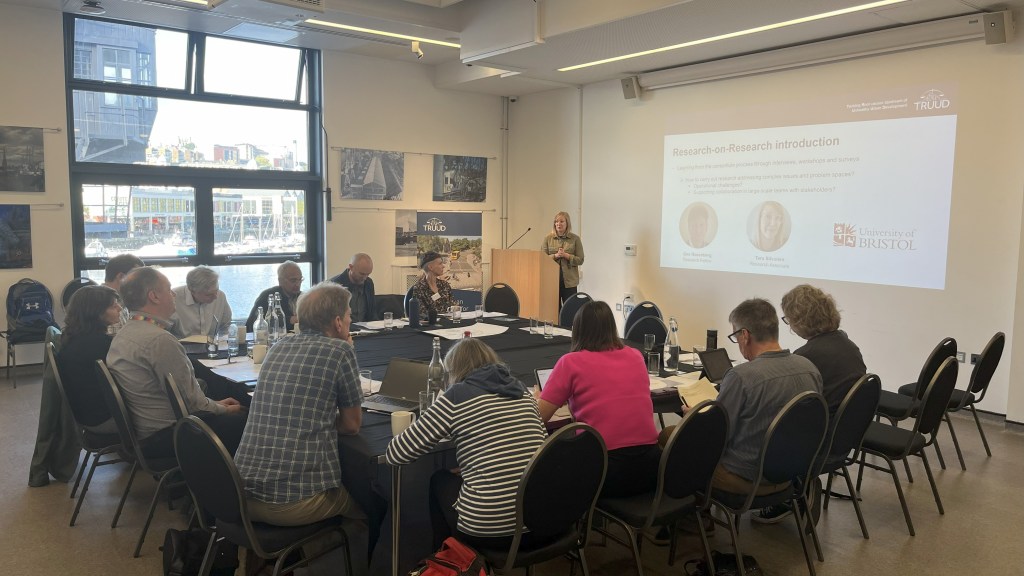
Supporting effective collaboration in large transdisciplinary research teams


Taru Silvonen and Ges Rosenberg

This blog post is based on the Evidence & Policy article, Optimising teamworking processes in an ongoing research consortium: a qualitative study’.

Considering collaboration is needed to solve complex societal problems, why are the structures that can help teams work together so often overlooked in research settings?

Complex research projects often require large teams with a wide range of expertise to work together. Working across disciplines and professional boundaries can be exciting but also comes with its own challenges, as shown by research in team science. These challenges are particularly present in transdisciplinary partnerships that aim to tackle evolving societal challenges, which makes our work relevant beyond academic teams. While interdisciplinary teams combine knowledge from different fields, transdisciplinary teams aim to create real-world change by involving both academic and non-academic partners. This provides opportunities for peer learning as well as bridging thinking between different perspectives. However, an appreciation of different ways of working, thinking, and communicating within a team will be required.

Our Evidence & Policy article shares insights from a UK-based research consortium called TRUUD (Tackling Root Causes Upstream of Unhealthy Urban Development), which focuses on creating healthier urban environments to reduce non-communicable diseases (NCDs) in the UK. TRUUD consists of 40+ academics in a transdisciplinary consortium, meaning it does not just combine academic disciplines – it also includes practitioners and stakeholders working together to solve real problems. Our qualitative study explores what helps large, complex teams work well together, especially in transdisciplinary (TD) settings, and how to overcome common challenges (i.e. building shared understanding and navigating conflict).

Continue reading

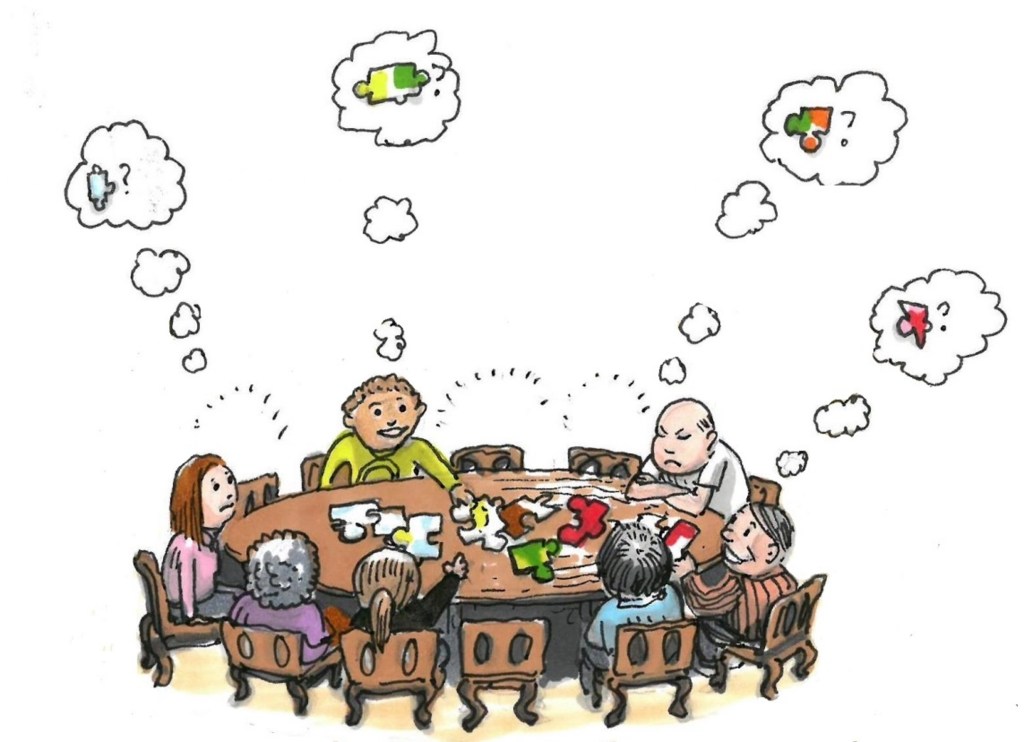
Knowledge sharing in integrated care teams: why bringing people together isn’t enough


Vicky Ward

In this blog post Vicky Ward responds to questions from Co-Editor-in-Chief, Dan Mallinson about her recent publication, ‘Knowledge practices in integrated care: an examination of health and social care teams using collective knowledge creation theory’.

Integrated care is commonly seen as the means to bridge gaps between organisations, services and professions across the health and care landscape and improve care. The promise is compelling: bring health and social care practitioners together, and they’ll share their expertise to create holistic, joined-up care for people with complex needs. Simple, right?

Not quite. After spending over two years observing case management meetings across five integrated teams, I found that knowledge sharing was far messier than the policy rhetoric suggests. My research drew on organisational knowledge creation theory to reveal four patterns that help explain why this is the case.

Continue reading

How to lead an evidence centre


Steve Martin

This blog post is based on the Evidence & Policy article, ‘Leading research–policy engagement: an empirical analysis of the capabilities and characteristics of leaders of evidence intermediary organisations’.

In the last ten years, a range of countries have invested in organisations designed to bridge the gap between researchers and policymakers. In the United Kingdom alone, we now have 12 What Works Centres, 30 Health Determinants Research Collaborations, three Local Policy Innovations Partnerships, several regional evidence centres, and dozens of policy engagement teams working in universities, businesses and charities.

The leadership of these evidence intermediaries is key to their effectiveness. But we know very little about their leaders – where they come, what they do, and what skills they need for the job. To help fill this gap, I conducted in-depth interviews with leaders of some of the UK’s most high-profile evidence intermediary organisations. Their stories provide fascinating ‘warts and all’ accounts of what it takes to lead an organisation that can overcome the formidable institutional barriers that often stand in the way of evidence-informed policy and practice.

Continue reading

Evidence & Policy Call for Abstracts: Special Issue: Strengthening Research Practice Partnerships in Social Care: Evidence, Impact and Policy Learning

Special Issue Editors: Professor Annette Boaz and Professor Ann-Marie Towers

Abstract Submission Deadline: Monday 3 November 2025

Background to the Special Issue

Research practice partnerships (RPPs) offer transformative potential by embedding rigorous evidence into decision making and practice, yet there is limited synthesis of how such collaborations function and their influence on policy and practice.  Research practice partnerships have featured in previous editions of Evidence & Policy (for example, Hoekstra et al 2021; Gray et al 2024) and the importance of collaborative working and relationships is a core theme in journal submissions, including in a key paper by Best and Holmes (2010).

This Evidence & Policy special issue builds on empirical and conceptual learning from six RPPs in England funded by the National Institute for Health and Care Research.  It will also feature contributions from a wider group of partnerships emerging from the social care/ human services sectors internationally—to generate comparative insights on structures, mechanisms for co production, knowledge mobilisation strategies, and policy impact. 

Aims of the special issue:

  1. Evaluate the impact of RPP typologies in social care/ human services.
  2. Examine co-production and governance models that facilitate practitioner and public engagement.
  3. Evaluate how generated evidence contributes to organisational policy decisions and builds research capacity
  4. Identify transferable lessons for establishing and sustaining collaborative RPPs.

Invitation to Submit Proposals

Interested authors should send a 300-word abstract to Special Issue Editors Professor Annette Boaz (Annette.boaz@kcl.ac.uk) and Professor Ann-Marie Towers (ann-marie.towers@kcl.ac.uk) by Monday 3 November 2025.

Invitations for full paper submissions will be sent in mid-November, and full papers will be due by end of March 2026.

We welcome submissions on:

  • Research Articles employing mixed methods evaluations of RPP outcomes.
  • Perspectives discussing methodological and ethical challenges in partnership design.
  • Theory & Methods papers on frameworks for assessing embedded evidence impact.

Against unanimity: the perils of negotiating collective policy recommendations across a diverse third sector


Jane Cullingworth

This blog post is based on the Evidence & Policy article, Strengthening the role of third sector intermediary bodies in democratic governance: developing strategies with state and non-state actors’.

We can all agree that evidence needs to shape policy but how do we gather evidence, particularly from the frontlines? With the rise of participatory governance and an interest in the perspectives of communities, the third sector is uniquely placed to play a key role in facilitating and generating this evidence. But given the diversity of third sector stakeholders and multitude of perspectives, how is such evidence understood, interpreted and represented?

Animating knowledge requires intermediaries (known as knowledge brokers) to translate lived experience into action, addressing the know-do gap – that is, a gap between knowledge and policy. Across the third sector there are many intermediary bodies – organisations that support the sector and represent its interests. While these organisations are not typically thought of as knowledge brokers in the policy arena, they play an important role in ensuring that the voices of citizens and civil society groups are included in policy. Many are highly active in networks and partnerships with state actors.

Continue reading

Optimising microsurveys to improve the use of research evidence from websites


Esmeralda Michel, Megan Mitchell, Nehal Eldeeb and Valerie B. Shapiro

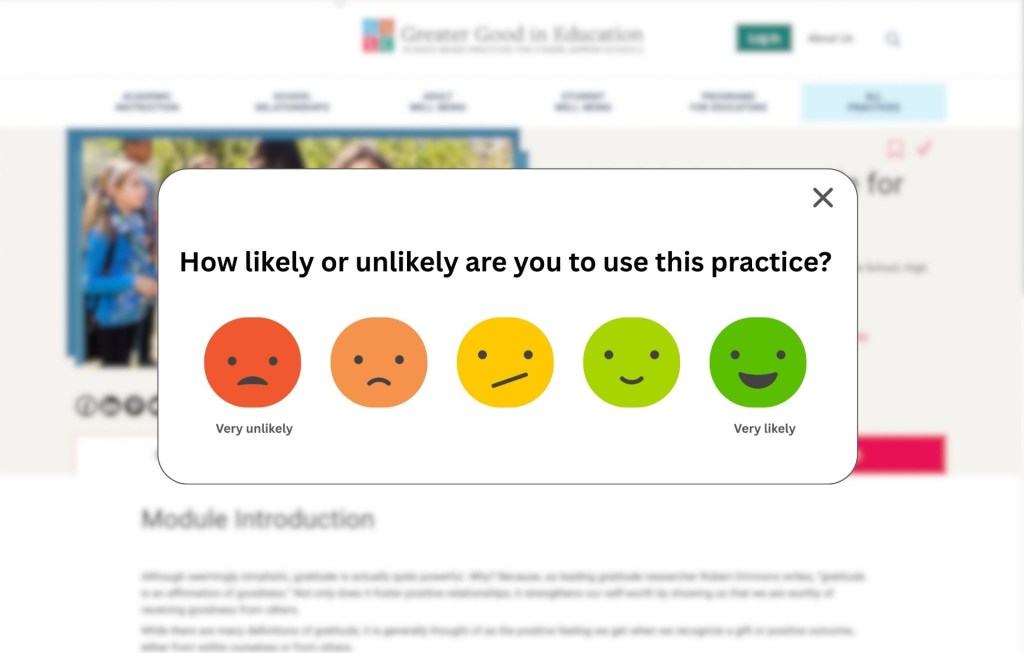
This blog post is based on the Evidence & Policy article, Promoting the use of research evidence from websites: optimising microsurveys as feedback loops to drive improvement’.

There are many efforts to make research evidence accessible to educators online through toolkits and in other user-friendly formats. Intermediaries – which are organisations that sit between research and practice – can take on the mission of synthesising, translating and sharing research for the public. One such intermediary is the Greater Good in Education (GGIE), an organization that hosts a website of evidence-based practices for educators. Yet a persistent challenge remains among these types of intermediaries: once research evidence is packaged and posted, how do we know the extent to which the evidence is being accessed, appraised and applied in practice? Intermediaries are missing ‘feedback loops’ that could help the intermediaries adapt and improve their efforts to promote the use of research evidence.

In a recent study published in Evidence & Policy, researchers Eldeeb, Ren, and Shapiro explored whether microsurveys could help fill this gap. Microsurveys are short surveys embedded directly on a webpage, triggered by specified interactions with the website. They can capture real-time feedback from users, providing actionable insights into whether research evidence is likely to be applied in practice.

Continue reading

Recognising the expertise of people with disability


Shane Clifton

This blog post is based on the Evidence & Policy article, Disability lived experience and expertise: recognising the expert contributions of people with disability’.

The disability rights movement was founded on the principle of ‘Nothing About Us Without Us’. This idea highlights the importance of including people with disability in decisions that affect them and recognises their expertise in shaping their own lives. While people with disability have too often been subject to controlling and dehumanising systems, as we explore in our recent study, there is now a growing understanding that disabled people should play key roles in designing, producing and leading disability healthcare, policy and research. The knowledge they bring is often called ‘lived experience’.

Continue reading

Beyond barriers: new insights from the ESRC Policy Fellowships


Matthew Flinders and Jessica Benson-Egglenton

This blog post is based on the Evidence & Policy article, ‘Understanding the dynamics of research–policy fellowships: an evaluative analysis of barriers and blockages’.

Supporting embedded academics requires understanding role types, managing ‘bandwidth,’ and setting clear expectations.

In recent years the dominant notion of ‘research excellence’ has expanded to include a joint emphasis on both knowledge creation and knowledge utilisation. Research funding is now targeted as addressing specific societal challenges. Forms of co-production and co-design have been promoted as a way of bringing potential research-users into project design and delivery. Thus, a vast and complex landscape of boundary-spanning initiatives and investments has been established to facilitate the use of research by policy-makers.

The challenge, however, is that policy-making is a messy and sometimes irrational process. Brian Hogwood and Lewis Gunn famously exposed this simple fact in their book Policy Analysis for the Realworld (1985), and recent work from the Institute for Government underlines the continuing validity of ‘the real-world messiness’ argument.

Continue reading

New Evidence & Policy issue – Volume 21: Issue 3

The editorial team of Evidence & Policy are excited to share this special collection of articles focused on the intersections between health, evidence use, and the application of research within evolving and complex public health policy contexts.

Articles in this issue explore and critically examine innovative models and frameworks (i.e., Functional Dialogue, Policy Advisory Boards) for leveraging research to inform policy in times of public health crisis (specifically, the COVID-19 pandemic). They also focus on improving medical practice (i.e., Knowledge Brokering, Contemporary Implementation of Traditional knowledge and Evidence (CITE) Framework, Integrated Systems of Care), as well as efforts to expand and broaden health care coverage and directly influence policy addressing structural determinants of health (Participatory Deliberative Processes).

Continue reading