Knowledge sharing in integrated care teams: why bringing people together isn’t enough


Vicky Ward

In this blog post Vicky Ward responds to questions from Co-Editor-in-Chief, Dan Mallinson about her recent publication, ‘Knowledge practices in integrated care: an examination of health and social care teams using collective knowledge creation theory’.

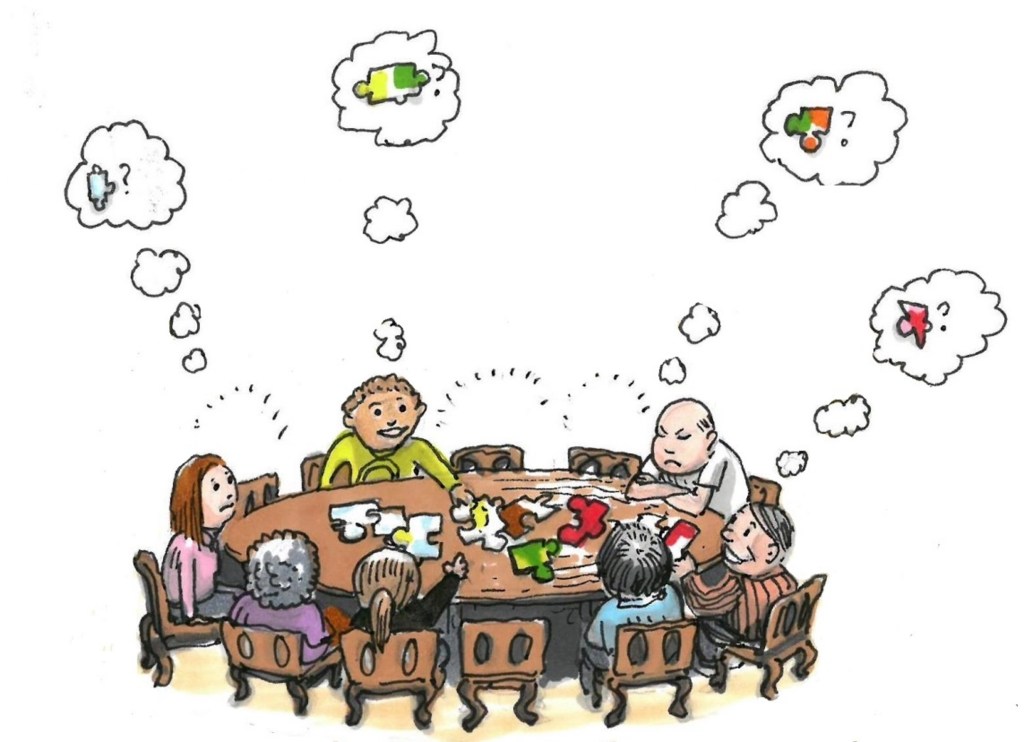
Integrated care is commonly seen as the means to bridge gaps between organisations, services and professions across the health and care landscape and improve care. The promise is compelling: bring health and social care practitioners together, and they’ll share their expertise to create holistic, joined-up care for people with complex needs. Simple, right?

Not quite. After spending over two years observing case management meetings across five integrated teams, I found that knowledge sharing was far messier than the policy rhetoric suggests. My research drew on organisational knowledge creation theory to reveal four patterns that help explain why this is the case.

Continue reading


The knowledge broker within: understanding evidence use inside public agencies


Louise Shaxson, Rick Hood, Annette Boaz and Brian Head

This blog post is based on the Evidence & Policy article, ‘Knowledge brokering inside the policy making process: an analysis of evidence use inside a UK government department’.

Knowledge brokering is often presented as a way of ensuring that evidence reaches government departments, but we have little understanding of what happens next. Our research shows that some civil servants can also act as internal knowledge brokers between evidence and policy. This raises important questions for how we understand processes of evidence-informed policymaking.

Continue reading

What knowledge informs policy decisions? And how can we measure it?


Jonas Videbæk Jørgensen

This blog post is based on the Evidence & Policy article, ‘Knowledge Utilisation Analysis: measuring the utilisation of knowledge sources in policy decisions.

Using research-based knowledge to inform policy decisions constitutes a key ambition in most modern democracies. As such, enhancing the utilisation and impact of research has gained widespread attention among scholars and policymakers, with a range of initiatives to promote it. But how often is research-based knowledge used in policy decisions? And what kinds of knowledge have the strongest impact? Despite years of scholarship on the topic, measuring knowledge utilisation remains a significant challenge. In a new Evidence & Policy article, I discuss existing measures of knowledge utilisation and present a new approach called ‘Knowledge Utilisation Analysis’ (KUA).

Continue reading

Naturopaths place a stronger emphasis on the patient’s experience of their health compared to information from other health professionals when making clinical decisions


Prof Amie Steel, Dr Iva Lloyd, Prof Matthew Leach and Dr Vicky Ward

This blog post is based on the Evidence & Policy article, ‘Naturopaths’ behaviours, attitudes and perceptions towards the use of knowledge and information sources’.

The modern health landscape is dominated by the evidence-based practice paradigm which asks health professionals to prefer research evidence over other forms of knowledge and information when providing care to their patients. However, clinicians from most areas of health – including general practice and allied health – have argued that the realities of practice are not so simple. While this ‘messiness’ of clinical practice is documented for many mainstream health professions, there has been little to no research examining how clinicians from traditional medicine systems use knowledge and information in their practice, until now.

An international survey of naturopaths was recently published in Evidence and Policy which found they used a diverse range of knowledge and information sources when making clinical decisions. The survey respondents practice naturopathy, a traditional medicine system originating from Europe but now practiced in 108 countries across all world regions. Naturopathy uses a highly patient-centred and holistic clinical approach that prioritises preventive health and wellness, and patient education and empowerment.

Continue reading

Knowledge brokers in local policy spaces: early career researchers and dynamic ideas

Sarah Weakley and David Waite

This blog post is based on the Evidence & Policy article, ‘Academic knowledge brokering in local policy spaces: negotiating and implementing dynamic idea types’.

It is now commonplace for many academics within higher education institutions to simultaneously take on the roles of both knowledge producers and knowledge brokers in policy spaces as part of their everyday working. In these roles at the intersection of the evidence and policy nexus, they undertake traditional research activities but also engage with policy actors using their research ideas and expertise to change conversations and develop solutions to policy problems. In our new article in Evidence and Policy, ‘Academic knowledge brokering in local policy spaces: negotiating and implementing dynamic idea types’, we reflect on how ideas move within local policy spaces and the hands that move them. We considered this issue in the context our own work with local bodies in two different policy arenas – one looking at social recovery after Covid-19 and one focussed on socioeconomic change.

Continue reading

Embracing creativity in co-production using the arts

Stephen MacGregor, Amanda Cooper, Michelle Searle and Tiina Kukkonen

This blog post is based on the Evidence & Policy article, ‘Co-production and arts-informed inquiry as creative power for knowledge mobilisation’, part of the Special Issue on Creativity and Co-production.

The days of research reports going unread by all but their authors and articles being hidden behind publisher paywalls are giving way to more collaborative research approaches. One that has provoked great attention in recent years is co-production, an approach that acknowledges the unique knowledge and expertise different individuals can bring to the research process. However, the evidence base for co-production has not kept pace with the excitement surrounding it.

In our recent Evidence & Policy article, we asked, ‘How can seeing co-production as a creative endeavour create opportunities to move knowledge into action?’ To answer this question, we examined three cases focused on promoting shared understanding and action in the Canadian education sector. Each case used artful practices to promote meaningful reflection, understanding and representation of individual and communal experiences.

Unique to our study was the use of a realist perspective. Realist explanations look to develop reasoned pathways from specific mechanisms and contexts to observed outcomes (see Pawson & Tilley, 1997). Researchers typically refer to these as CMO configurations and represent the expression as: context + mechanism = outcome. These explanations are helpful because we can learn about the possibility of transferring lessons learned from one instance of co-production to another. What’s more, by comparing these CMO configurations across our three cases, we can identify common propositions about arts-informed approaches to co-production.

Continue reading

Engaging refugee women and girls as safeguarding experts, using creative and participatory methods

Alina Potts

This blog post is based on the Evidence & Policy article, Engaging refugee women and girls as experts: co-creating evidence on sexual exploitation and abuse in humanitarian crises using creative, participatory methods’, part of the Special Issue on Creativity and Co-production.

Efforts to build evidence on how best to deliver humanitarian assistance have grown over the past decade, at a time when the number of forcibly displaced people in the world has risen to over 84 million. Yet crisis-affected people are often left out of shaping the questions asked, and participating in answering them. Creative, participatory research methods can break down these silos and enable the co-production of evidence with displaced populations, and its uptake for practice and policy. The ‘Empowered Aid‘ study engages in participatory action research with refugee women and girls in Uganda and Lebanon to examine how to better prevent sexual exploitation and abuse (SEA) in aid delivery. Co-producing knowledge about violence with those most affected by it creates actionable evidence to reduce risks.

In humanitarian settings, pre-existing power imbalances due to gender, age, and other factors can be exacerbated. While women and children account for a large share of the displaced, they are often left out of decision making, despite the impact aid delivery has on their lives and their heightened risk of gender-based violence, including sexual exploitation and abuse (SEA). While a system of reporting and response has been put in place over the last two decades, many survivors are discouraged from using it due to a lack of access, information, and trust in the process or the organisations leading it. Accountability mechanisms have also focused on responding to abuses already perpetrated, rather than working to prevent them.

Continue reading

I’m not in the ‘too hard basket’ – I wove my kete to create my success

Katey Thom, Stella Black, David Burnside and Jessica Hastings

This blog post is based on the Evidence & Policy article, ‘He Ture Kia Tika/Let the Law Be Right: informing evidence-based policy through kaupapa Māori and co-production of lived experience’, part of the Special Issue on Creativity and Co-production.

A kaupapa Māori co-production project that honours the voices of those with lived experience of incarceration

Research often tells us most prisoners have experienced mental distress or addiction within their lifetime but often end up in the ‘too hard basket’. The criminal justice system of Aotearoa, with its strong Westminster roots, significantly contributes to intergenerational traumatic experiences and struggles to get help that is needed. Our project aimed to reject this basket, replacing it with a diverse array of kete (baskets) filled with localised mātauranga (ancient knowledge derived from a te ao Māori worldview), strategies and solutions to improve wellbeing and reduce reoffending.

Continue reading

Harnessing creativity in participatory research – the tension between process and product

Louise Phillips, Maria Bee Christensen-Strynø and Lisbeth Frølunde

This blog post is based on the Evidence & Policy article, ‘Arts-based co-production in participatory research: harnessing creativity in the tension between process and product’, part of the Special Issue on Creativity and Co-production.

In participatory research, researchers share the ideal of democratising knowledge production, on the basis of an expanded understanding of what counts as knowledge and whose knowledge counts. People with knowledge based on their own lived experience take part as co-researchers in processes of co-producing knowledge together with academic researchers. This process of harnessing the knowledge of people with lived experience can make a valuable contribution to the transformation of health and social care practice, as well as to the research field.

Arts-based research methods are often used to draw out the personal knowledge of co-researchers, including the emotional and aesthetic dimensions. But the use of arts-based co-production in participatory research does not easily get rid of the difficulties of putting the principles into practice – due to the tensions that arise between cultivating the collaborative, creative process and generating specific research results.

Continue reading

A new way for system design: building a relational infrastructure

Mandy D. Owens, Sally Ngo, Sue Grinnell, Dana Pearlman, Betty Bekemeier and Sarah Cusworth

This blog post is based on the Evidence & Policy article, ‘Co-producing evidence-informed criminal legal re-entry policy with the community: an application of policy codesign’, part of the Special Issue on Creativity and Co-production.

Health service researchers are plagued by the fear that policy and system-level improvement efforts will ignore or under-utilize research. Consequently, efforts at system improvement that come out of research centers tend to use “research-first” approaches that include protocols, trainings, and coaching sessions around evidence-based programs. But oftentimes the issue is not that a system is unaware of the research, it is uncertainty about how to get something going that fits the local context. This has as much or more to do with local values, personalities, and working relationships as it does with the specifics of a protocol.

Our study finds that engaging a community in a policy codesign process that prioritizes mutual learning, rather than a protocol, not only yielded a high-quality plan but built the relational infrastructure for local collaboration long after the external design facilitators left.

Continue reading