New Evidence & Policy issue – Volume 21: Issue 4

The editorial team of Evidence & Policy is pleased to see the publication of our fourth and final issue for 2025, Evidence & Policy Volume 21: Issue 4. This issue has a lot of work focused on how political elites use and are impacted by evidence in the policymaking process. A major thread through this work is that while evidence has an impact, there are important limitations.

The first piece examines programs designed to support scientists and engineers in engaging in public policy, specifically studying the state of Virginia. Through surveys and interviews of program leaders, the study finds evidence of perceived impact, though limits in the ability to implement evidence-based approaches.

The second article also finds impact and its limitation, but this time using policy documents. They find that policy think tanks draw from academic expertise more readily than governments.

Continue reading

New Evidence & Policy issue – Volume 21: Issue 3

The editorial team of Evidence & Policy are excited to share this special collection of articles focused on the intersections between health, evidence use, and the application of research within evolving and complex public health policy contexts.

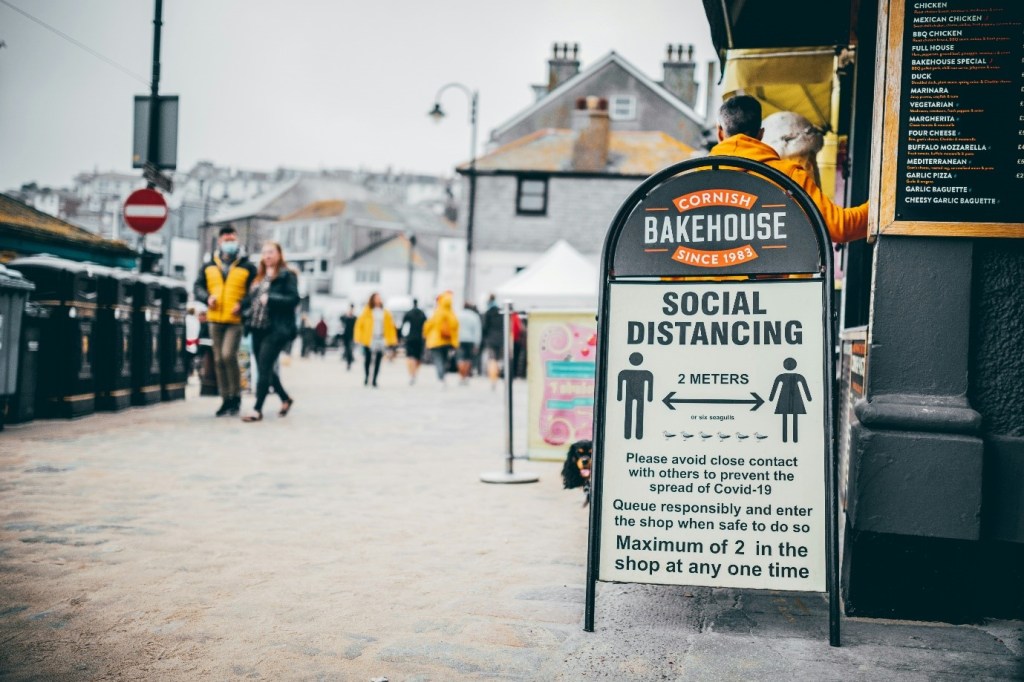
Articles in this issue explore and critically examine innovative models and frameworks (i.e., Functional Dialogue, Policy Advisory Boards) for leveraging research to inform policy in times of public health crisis (specifically, the COVID-19 pandemic). They also focus on improving medical practice (i.e., Knowledge Brokering, Contemporary Implementation of Traditional knowledge and Evidence (CITE) Framework, Integrated Systems of Care), as well as efforts to expand and broaden health care coverage and directly influence policy addressing structural determinants of health (Participatory Deliberative Processes).

Continue reading

Designing the CITE framework: integrating traditional knowledge in contemporary health


Amie Steel and Hope Foley

This blog post is based on the Evidence & Policy article, ‘Designing the Contemporary Implementation of Traditional knowledge and Evidence (CITE) framework to guide the application of traditional knowledge in contemporary health contexts: a Delphi study’.

The Contemporary Implementation of Traditional Knowledge and Evidence (CITE) framework is a groundbreaking guide designed to integrate traditional medicine (TM) with modern healthcare systems. Developed through expert consensus, with the results published in Evidence & Policy, this framework provides essential principles and criteria for evaluating and applying traditional knowledge in clinical practice, research, education and policy. As global health initiatives and institutions increasingly recognise the value of Traditional, Complementary and Integrative Healthcare (TCIH), the CITE Framework offers a timely, practical solution for ensuring the quality, safety, and efficacy of these practices in contemporary health contexts.

Continue reading

Evidence & Policy Call for Associate Editors


The Editorial Management Board of the journal Evidence & Policy invites applications for Associate Editors. Evidence & Policy is the first peer-reviewed journal dedicated to comprehensive and critical assessment of the relationship between research evidence and the concerns of policy makers and practitioners, as well as researchers.

Continue reading

The empathy puzzle: why do some of us excel at learning empathy?


Atefeh Galehdarifard, Mojgan Khademi, Mohammad Gholami, Moloud Radfar, Farzad Ebrahimzadeh and Mohammad-Hasan Imani-Nasab

This blog post is based on the Evidence & Policy article, ‘The impact of knowledge brokering on nurses’ empathy with patients receiving cardiac care: an experimental study’.

Empathy is a fundamental concept in the development of human relationships. Whether individuals have a natural inclination toward empathy or have cultivated it through education and upbringing, this background can significantly influence the effectiveness of interventions designed to promote empathetic behaviour. Our research suggests that individuals with higher levels of empathy are often more motivated to enact change, actively promote empathy, and show a greater willingness to learn and adopt empathetic behaviours in practice.

Continue reading

Functional dialogues: guiding vaccination policy during COVID-19 through direct knowledge transfer


Katie Attwell, Tauel Harper and Chris Blyth

This blog post is based on the Evidence & Policy article, ‘Facilitating knowledge transfer during Australia’s COVID-19 vaccine rollout: an examination of ‘Functional Dialogues’ as an approach to bridge the evidence–policy gap’.

When the COVID-19 pandemic hit, we wanted to use our skills to help with the eventual vaccine rollout. Chris was already well-placed to do so. As Chair of Australia’s Technical Advisory Group on Immunisation (ATAGI), he had years of experience in aspects of vaccine policymaking. Katie was an emerging leader in vaccination social science and policy, and, like Chris, she had strong connections in the Western Australian Department of Health. They knew that the team focused on administering Australia’s National Immunisation Program would have their hands full with supporting the existing programme during COVID-19 times. How could they also prepare for a pandemic vaccine rollout?

Continue reading

Shaping policy with climate resilience stories: Cape Town’s most affected speak for themselves


Laurence Piper, Gillian Black, Anna Wilson, Liezl Dick and Tsitsi Mpofu-Mketwa

This blog post is based on the Evidence & Policy article, ‘Policy engagement as ‘empowered representation’: democratic mediation through a participatory research project on climate resilience’.

Policy engagement is both a condition and moral obligation of publicly funded research projects in many countries, and our case in South Africa was no different. It was just relatively difficult.

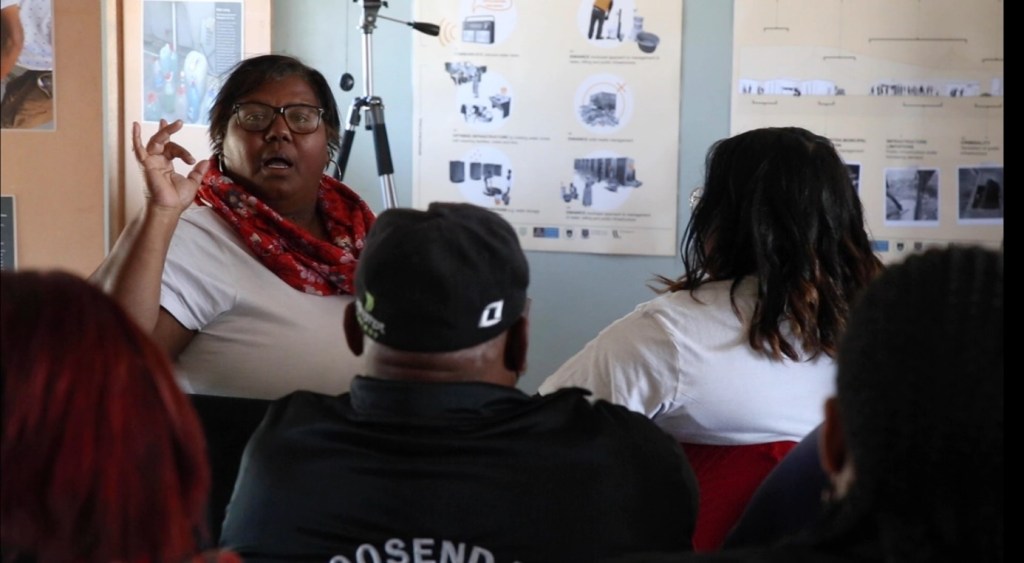
In 2019 we won a UKRI grant to do participatory research on how people living in poor settlements in Cape Town experience and respond to the climate-related hazards of water scarcity, floods and fires. The idea was to work closely with affected community members in understanding how they coped with these disasters, and what they thought could be done better in the future, by themselves and with help from others. We discussed our experiences in our recent article in Evidence and Policy, and summarise some of them here.

These community participants then presented their experiences and ideas for climate resilience as ‘best bets’ to government officials in a series of deliberative workshops.

Continue reading

The forest or the trees? What we know about Covid-19 advisory bodies


Clemence Bouchat, Sonja Blum, Ellen Fobé and Marleen Brans

This blog post is based on the Evidence & Policy article, ‘Policy advisory bodies during crises: a scoping review of the COVID-19 literature in Europe’.

The number of academic papers written about advice and policymaking increased following the start of the COVID-19 pandemic. When this kind of scholarship boom happens, it is easy to miss the forest for the trees. In our Evidence & Policy paper, ‘Policy advisory bodies during crises: a scoping review of the COVID-19 literature in Europe’, we clarify what actually came out of this new scholarship. We focus on the structures that formally provided policy advice to European governments during the pandemic, such as government agencies, ad hoc taskforces and research institutes.

Our review spanned 981 academic outputs published between 2020 and 2023. The review protocol follows the Preferred Reporting Items for Systematic Reviews and Meta-Analyses (PRISMA) guidelines. In the end, a corpus of 59 publications informed our findings.. Our corpus was mostly composed of qualitative studies, studies about the UK and Sweden, and studies that examined the first half of 2020. We found that the academic community has mostly focused on advisory body composition, body structure and the advisory process.

Continue reading

Policy to research policy fellowship programmes: forging connections and knowledge exchange between policymakers and researchers


Nicola Buckley and Kathryn Oliver

This blog post is based on the Evidence & Policy article, ‘Evaluating Policy to Research Fellowship programmes’.

Policy to Research (P2R) Fellowship programmeshave been found toforge connections and relationships between policymakers and researchers in academia and beyond, develop skills and knowledge among policymakers and researchers and can develop collaborative projects.

In our Evidence and Policy paper, we found 24 P2R Policy Fellowship programmes to study, from the UK, Europe and North America. The cost of providing these fellowships was estimated at around £5,000 per Policy Fellow, which is comparable to, or in some cases less than other methods for academic-policy engagement (e.g. workshops, training, Research to Policy Fellowships, funding research collaborations). More evaluations are needed to understand the role these Fellowships can play in developing the evidence-for-policy system.

Continue reading