New Evidence & Policy issue – Volume 21: Issue 4

The editorial team of Evidence & Policy is pleased to see the publication of our fourth and final issue for 2025, Evidence & Policy Volume 21: Issue 4. This issue has a lot of work focused on how political elites use and are impacted by evidence in the policymaking process. A major thread through this work is that while evidence has an impact, there are important limitations.

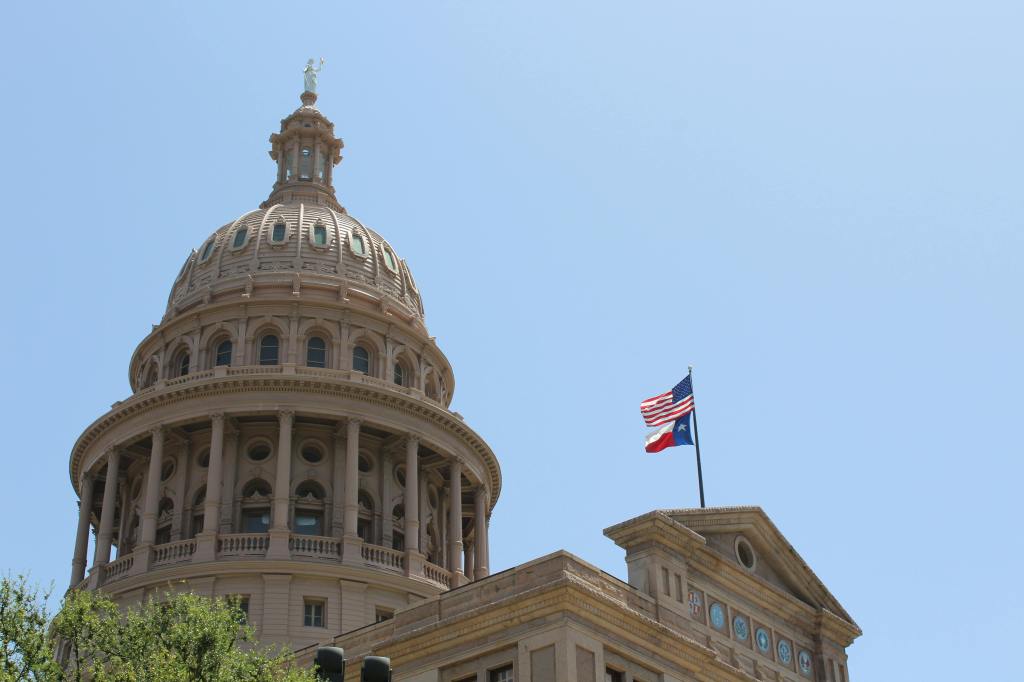
The first piece examines programs designed to support scientists and engineers in engaging in public policy, specifically studying the state of Virginia. Through surveys and interviews of program leaders, the study finds evidence of perceived impact, though limits in the ability to implement evidence-based approaches.

The second article also finds impact and its limitation, but this time using policy documents. They find that policy think tanks draw from academic expertise more readily than governments.

Continue reading

How to lead an evidence centre


Steve Martin

This blog post is based on the Evidence & Policy article, ‘Leading research–policy engagement: an empirical analysis of the capabilities and characteristics of leaders of evidence intermediary organisations’.

In the last ten years, a range of countries have invested in organisations designed to bridge the gap between researchers and policymakers. In the United Kingdom alone, we now have 12 What Works Centres, 30 Health Determinants Research Collaborations, three Local Policy Innovations Partnerships, several regional evidence centres, and dozens of policy engagement teams working in universities, businesses and charities.

The leadership of these evidence intermediaries is key to their effectiveness. But we know very little about their leaders – where they come, what they do, and what skills they need for the job. To help fill this gap, I conducted in-depth interviews with leaders of some of the UK’s most high-profile evidence intermediary organisations. Their stories provide fascinating ‘warts and all’ accounts of what it takes to lead an organisation that can overcome the formidable institutional barriers that often stand in the way of evidence-informed policy and practice.

Continue reading

New Evidence & Policy issue – Volume 21: Issue 3

The editorial team of Evidence & Policy are excited to share this special collection of articles focused on the intersections between health, evidence use, and the application of research within evolving and complex public health policy contexts.

Articles in this issue explore and critically examine innovative models and frameworks (i.e., Functional Dialogue, Policy Advisory Boards) for leveraging research to inform policy in times of public health crisis (specifically, the COVID-19 pandemic). They also focus on improving medical practice (i.e., Knowledge Brokering, Contemporary Implementation of Traditional knowledge and Evidence (CITE) Framework, Integrated Systems of Care), as well as efforts to expand and broaden health care coverage and directly influence policy addressing structural determinants of health (Participatory Deliberative Processes).

Continue reading

Researchers need training and support to effectively engage with policymakers


Kaitlin Brand, Shelby Flores-Thorpe, Yuzi Zhang, Amelia Roebuck, Tiffni Menendez, Rachel Linton, Taylor Bishop Scott, Max Crowley, Alexandra van den Berg and Deanna M. Hoelscher

This blog post is based on the Evidence & Policy article, ‘Evaluation of researchers’ policy-related knowledge, needs and self-efficacy before and after the 2021 Texas Legislative Session’.

Evidence-based health policy has long shaped public health intervention in the United States. For example, smoke-free policies, first introduced in the 1970s, prevent exposure to second-hand smoke, and folic acid fortification of grain products in the late 1990s significantly reduced rates of spina bifida and neural tube defects in newborns.  

Despite these successes, there’s still a considerable delay in the knowledge transfer of research to policy and practice. Many public health researchers want their work to inform health policy but face barriers to engagement with policymakers, such as different communication styles, decision-making frameworks, and timelines. Developing ongoing relationships and partnerships between researchers and decision-makers offers one solution as multiple studies suggest policymakers are more likely to use evidence to inform health policy when it comes from someone they know or respect. 

Continue reading

Bridging disciplinary silos: a URE methods repository to aid collaboration


Sallie Barnes, Annette Boaz and Kathryn Oliver

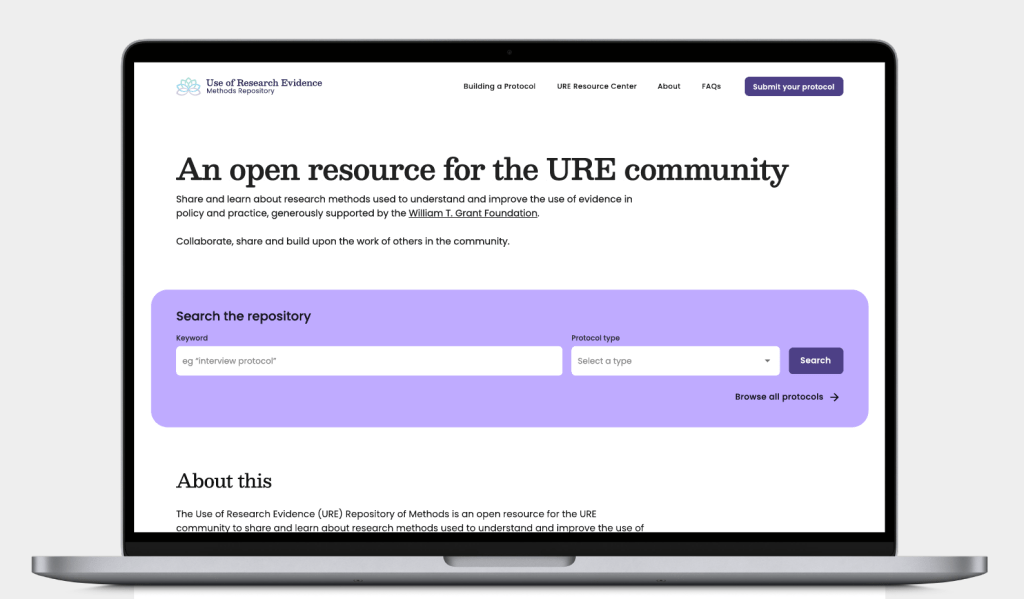
There are two critical problems facing the use of research evidence (or URE) space. The first is the limited opportunity to learn about how other disciplines are researching URE. The second is the lack of open and interdisciplinary debate about what counts as good quality research in the field. The URE Methods Repository seeks to address these problems. By providing improved access to published papers, data, analysis tools, and preprints, the repository aims to promote more connected, innovative practice and help us to avoid reinventing the wheel.

Continue reading

The challenge of sowing seeds of academic-policy engagement


Petra Mäkelä, Annette Boaz and Kathryn Oliver

This blog post is based on the Evidence & Policy article, The Capabilities in Academic Policy Engagement (CAPE) programme in England: a mixed methods evaluation.

“[M]ore is not the moral equivalent of better.”
Weiss 1979, p. 456

Ambitions for evidence-informed policymaking have led to a rise in knowledge-brokering initiatives between researcher and policy communities, propelling the development of a ‘rudderless mass’ of engagement activities. For researchers or policy professionals without pre-existing contacts or networks for academic-policy engagement, it can be difficult to know where to start. 

In our Evidence and Policy article, we report on a mixed methods evaluation of a programme known as Capabilities in Academic Policy Engagement (CAPE). CAPE operated as an academically-driven model, which generated an increase in engagement activities reacting to policy opportunities. Our article adds to the limited work that has empirically tested strategies for academic-policy engagement and their facilitation, to provide insights into their qualities and challenges.

Continue reading

Learning through comparison


Katherine Smith, Niklas Andreas Andersen and Valérie Pattyn

This blog post is based on the Evidence & Policy Special Themed Section ‘Learning Through Comparison’, Published in Evidence & Policy Vol 21 No 2, May 2025.

One of the central aspects of any process of learning and knowledge generation is the act of comparison. By comparing how our own ideas, norms and actions align or differ with those of others, we can see ourselves in a new light and thus better understand the particularities of our own situation as well as potentially re-evaluate taken-for-granted assumptions. This is true of every-day examples of individual learning as well as learning within and across research-communities. However, learning through comparison is also an inherently difficult endeavour as it often entails acquiring in-depth knowledge of research areas or settings that are (at least initially) completely foreign to us. This is perhaps one of the reasons why many fields of research often struggle to produce truly comparative research.

This is indeed the case with the now extensive research exploring, and trying to strengthen, the use of evidence in policy and practice. Single case studies and analyses of specific policy domains, countries or jurisdictions dominate this literature, limiting our ability to understand and compare how evidence, and evidence-for-policy mechanisms, function across time, and distinct institutional, national, and disciplinary contexts. The consequence is, we suggest, that we’re likely to be missing opportunities for cumulative knowledge building (in research) and lesson drawing (in practice).

Continue reading

Why may evidence-based policies fail to improve policy performance – and what can be done about it?


Jesper Dahl Kelstrup, Jonas Videbæk Jørgensen and Magnus Paulsen Hansen

This blog post is based on the Evidence & Policy article, The disenchanted fairy godmother: comparing how and why evidence-based management and public service professionals influenced policy performance in public school and active labour market policy in Denmark.

Almost two decades ago Carol H. Weiss and co-authors described the idea of evidence-based policies as a ’fairy godmother’ with ’some warts’. In other words, although evidence-based policies clearly entailed some challenges and drawbacks, like discounting local professional judgement, it was still worth pursuing to ’increase the rationality of decision-making’, as they put it.

Yet, studies of evidence-based policy making in action in the past decades have shown that although the aspiration to use evidence to enhance the legitimacy and effectiveness of policies is still widely shared, it often falls short. A common explanation for failure is the presence of various barriers. In our Evidence & Policy article, we critically revisit Weiss and her co-authors’ argument to question whether the challenges related to evidence-based policy making are in fact simply ’warts’ that can be removed, or are more fundamental challenges associated with the aims and management of evidence-based policy making in different policy areas.

Continue reading

Social studies, technology assessment and the pandemic 


Lise Moawad and Sebastian Ludwicki-Ziegler

This blog post is based on the Evidence & Policy article, Social studies, technology assessment and the pandemic: a comparative analysis of social studies-based policy advice in PTA institutions in France, Germany and the UK during the COVID-19 crisis’.

Undoubtedly, the COVID-19 pandemic has raised public awareness of the use of science by political decision-makers. Policymakers favouring plug-and-play solutions offered by ostensibly neutral ‘hard science’ is arguably not new, and the impression is somewhat reinforced by STEM-leaning structures dedicated to the assessment of science and technology. The underlying predisposition towards social sciences, arts and humanities of being somewhat biased or not neutral is still a commonplace critique. However, there has been a notable change in the role of social studies (encompassing humanities, arts and social sciences) for science and technology assessment in the last few years. Social studies were arguably at the forefront of debates examining the impact of COVID-19 on education and rule compliance. Taking advantage of their insights and methods has not just been welcomed by policymakers but has become an unavoidable necessity. 

Our research evaluated the integration of social studies in parliamentary structures dedicated to the assessment of science and technology (PTA structures) in France (Office parlementaire d’évaluation des choix scientifiques et technologiques [OPECST]), Germany (Büro für Technikfolgen-Abschätzung beim Deutschen Bundestag [TAB]) and the United Kingdom (Parliamentary Office of Science and Technology [POST]) during the COVID-19 pandemic (3/2020 to 2/2022). To assess the role of social studies in these PTA structures, we utilised Hanna Pitkin’s concept of representation and used a multi-method approach (document analysis and prosopography). While our results give grounds for some optimism that social studies has potential for providing valuable insights, its analytical capacities and evidence – albeit to varying degrees – remain underutilised.  

Continue reading

Training scientists for policy: mapping science-policy programmes in the United States 


K. L. Akerlof, Todd Schenk, Adriana Bankston, Jessica L. Rosenberg, Anne-Lise K. Velez, Lisa Eddy and Nikita Lad

This blog post is based on the Evidence & Policy article, Training researchers to engage in policy in the United States: mapping the growth and diversity of programme models’.

In recent years, state-level programmes that support the engagement of scientists in public policy have been growing across the United States. These initiatives offer training, networking and government placements to help bridge the gap between research and policymaking. However, little data exist on the structure, goals and impacts of these programmes. A recent study describes this evolving national landscape, using programmes in Virginia as a case study.

The rise of science policy training
A growing number of programmes seek to prepare researchers for active roles in policy. These initiatives include:

  • Academic programmes offering courses, certificates, degrees and workshops in science policy.
  • Student organisations that provide training and networking opportunities.
  • Government placements and fellowships that immerse researchers in legislative and executive roles.
Continue reading