Does public policy and administration research influence governance? 


Robin Haunschild, Kate Williams and Lutz Bornmann

This blog post is based on the Evidence & Policy article, The influence of public policy and administration expertise on policy: an empirical study’.

To what extent is academic expertise used in governance processes around the world? Do actors in the policy and public sector draw on research to improve their decision making? Are public administration researchers providing the public policy sector with relevant expertise for their decision making? These core questions led us to analyse the uptake of public policy and administration (PPA) research in policy documents.

Our study is based on the Overton database because it currently has the largest coverage of policy documents (broadly defined). The database makes available the meta data (e.g., title, URL, issuing organisation) of the policy documents and their cited references. Thus, we were able to connect the policy documents with the PPA research they cited using the Web of Science (WoS, Clarivate), an established resource with quality control for indexed journals. These direct citation relations provide insights into the knowledge flows from research to policymaking. We looked at 41 WoS-indexed journals that are classified under the category “Public Administration” by Clarivates’ Journal Citation Reports.

Continue reading
Shaping policy with climate resilience stories: Cape Town’s most affected speak for themselves


Laurence Piper, Gillian Black, Anna Wilson, Liezl Dick and Tsitsi Mpofu-Mketwa

This blog post is based on the Evidence & Policy article, ‘Policy engagement as ‘empowered representation’: democratic mediation through a participatory research project on climate resilience’.

Policy engagement is both a condition and moral obligation of publicly funded research projects in many countries, and our case in South Africa was no different. It was just relatively difficult.

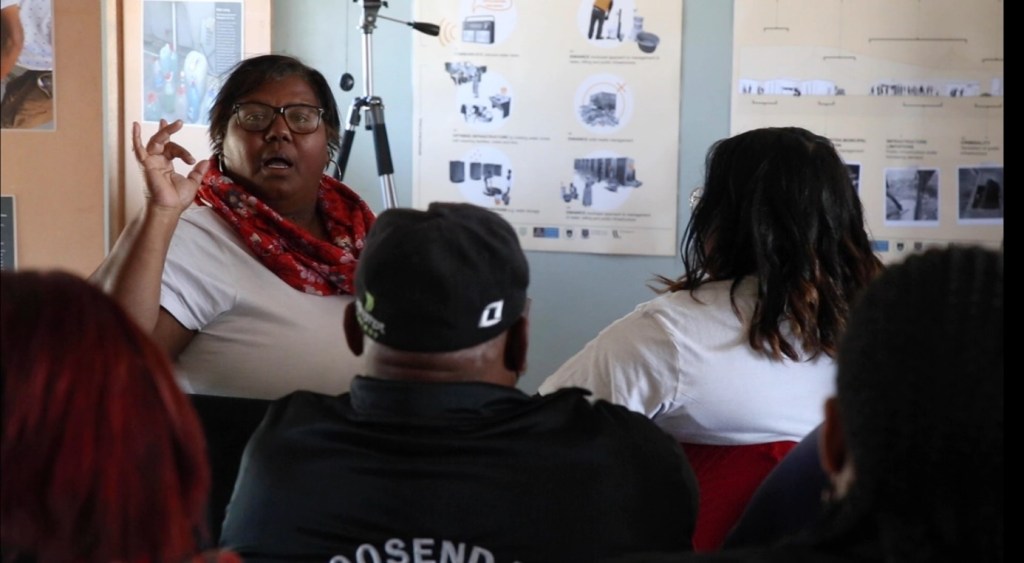
In 2019 we won a UKRI grant to do participatory research on how people living in poor settlements in Cape Town experience and respond to the climate-related hazards of water scarcity, floods and fires. The idea was to work closely with affected community members in understanding how they coped with these disasters, and what they thought could be done better in the future, by themselves and with help from others. We discussed our experiences in our recent article in Evidence and Policy, and summarise some of them here.

These community participants then presented their experiences and ideas for climate resilience as ‘best bets’ to government officials in a series of deliberative workshops.

Continue reading

The forest or the trees? What we know about Covid-19 advisory bodies


Clemence Bouchat, Sonja Blum, Ellen Fobé and Marleen Brans

This blog post is based on the Evidence & Policy article, ‘Policy advisory bodies during crises: a scoping review of the COVID-19 literature in Europe’.

The number of academic papers written about advice and policymaking increased following the start of the COVID-19 pandemic. When this kind of scholarship boom happens, it is easy to miss the forest for the trees. In our Evidence & Policy paper, ‘Policy advisory bodies during crises: a scoping review of the COVID-19 literature in Europe’, we clarify what actually came out of this new scholarship. We focus on the structures that formally provided policy advice to European governments during the pandemic, such as government agencies, ad hoc taskforces and research institutes.

Our review spanned 981 academic outputs published between 2020 and 2023. The review protocol follows the Preferred Reporting Items for Systematic Reviews and Meta-Analyses (PRISMA) guidelines. In the end, a corpus of 59 publications informed our findings.. Our corpus was mostly composed of qualitative studies, studies about the UK and Sweden, and studies that examined the first half of 2020. We found that the academic community has mostly focused on advisory body composition, body structure and the advisory process.

Continue reading

Policy to research policy fellowship programmes: forging connections and knowledge exchange between policymakers and researchers


Nicola Buckley and Kathryn Oliver

This blog post is based on the Evidence & Policy article, ‘Evaluating Policy to Research Fellowship programmes’.

Policy to Research (P2R) Fellowship programmeshave been found toforge connections and relationships between policymakers and researchers in academia and beyond, develop skills and knowledge among policymakers and researchers and can develop collaborative projects.

In our Evidence and Policy paper, we found 24 P2R Policy Fellowship programmes to study, from the UK, Europe and North America. The cost of providing these fellowships was estimated at around £5,000 per Policy Fellow, which is comparable to, or in some cases less than other methods for academic-policy engagement (e.g. workshops, training, Research to Policy Fellowships, funding research collaborations). More evaluations are needed to understand the role these Fellowships can play in developing the evidence-for-policy system.

Continue reading

Science communication poses barriers in Congress for evidence-based policymaking, but less so for science and engineering fellows


K. L. Akerlof, Maria Carmen Lemos, Emily T. Cloyd, Erin Heath, Selena Nelson, Julia Hathaway and Kristin M. F. Timm

This blog post is based on the Evidence & Policy article, ‘Science communication in Congress: for what use?

A new model published in Evidence & Policy explains the factors that enable and constrain science communication in the U.S. Congress. We depict how the use of scientific information is most often called upon to support established positions, as opposed to formulating new policies, and that this changes the nature of the barriers to science communication. We studied this in the context of two types of Congressional staff: 1) science and engineering fellows who spend a year serving primarily in the personal offices of members (hereafter referred to as fellows), and 2) the legislative staff with whom they work. We found that fellows serving on the Hill experience fewer barriers to use of scientific information than legislative staff, which suggests the importance of scientific fluency for building congressional capacity.

Continue reading

Putting meat on the bones of data – how legislators define research evidence


Elizabeth Day

This blog post is based on the Evidence & Policy article, ‘How legislators define research evidence’.

When people ask about my research area, I answer that I study how policymakers use research evidence. Their response always follows a similar thread: ‘That sounds hard’ and ‘Ha! Do they even know what research is?’ These reactions align with a broader opinion in the United States that elected officials are clueless when it comes to using research evidence in the decision-making process.

Yet there are plenty of examples in research, legislation, and regulations where policymakers do use research in their work. My colleague Karen Bogenschneider and I wondered if this mismatch – assuming policymakers don’t use research when there are examples that they do – might have to do with a jingle-jangle problem: Do researchers and legislators actually mean the same thing when they say ‘research evidence’?

Continue reading

Engaged scholarship entrepreneurship and policy impact


Kiran Trehan

This blog post is based on the Evidence & Policy article, ‘Compatible bedfellows? Engaged scholarship entrepreneurship and policy impact’.

In a rapidly evolving world, the role of entrepreneurship research and its impact on policy is more critical than ever. In this blog, I expand on my commentary on Johnson (2023) by exploring the intricate relationship between theory and its real-world application, shedding light on the uncertainty that has long surrounded entrepreneurship and small and medium-sized enterprise (SME) research. For years, the debate on how research can truly impact practice has been at the forefront of social science discussions (Beyer & Trice, 1982; Starkey and Tempest, 2005; Rynes, 2007; Trehan et al., 2018, 2022). This debate has emphasized the need for applied research in entrepreneurial scholarship that reflects the actual experiences of businesses.

Recognizing and appreciating the importance of research impact is not just a strategic concern for university business schools; it’s a measure of research’s real-world value. The gap between researchers and practitioners has significantly influenced how research is perceived, with academics focusing on ‘rigor’ and practitioners on ‘relevance’. Striking a balance between these expectations is crucial for both communities (Trehan, 2022). Edwards (2018) asserts that achieving policy impact is not only desirable but feasible, despite challenges such as engaging small business owners and the requirement for sustained interaction over time. Policy impact is attainable, but significant challenges persist, particularly in catering to the needs of small business owners and maintaining prolonged engagement.

Continue reading

What can we learn from local government research systems?


Andrew Booth, Emma Hock and Alison Scope

This blog post is based on the Evidence & Policy article, ‘Examining research systems and models for local government: a systematic review’.

Local government has been unfairly characterised as a black hole when it comes to getting evidence into practice. While it is true that work remains to be done to cultivate interest in research across local government, our recent review found plenty of evidence of academia, local officials and other partners collaborating to make a difference around the generation and use of locally-meaningful research.  

What seems to be less common, however, are coordinated approaches to organising research activity within and across an entire local government system. What can we learn from diverse approaches that harness mechanisms across different local government systems?

Continue reading

What knowledge informs policy decisions? And how can we measure it?


Jonas Videbæk Jørgensen

This blog post is based on the Evidence & Policy article, ‘Knowledge Utilisation Analysis: measuring the utilisation of knowledge sources in policy decisions.

Using research-based knowledge to inform policy decisions constitutes a key ambition in most modern democracies. As such, enhancing the utilisation and impact of research has gained widespread attention among scholars and policymakers, with a range of initiatives to promote it. But how often is research-based knowledge used in policy decisions? And what kinds of knowledge have the strongest impact? Despite years of scholarship on the topic, measuring knowledge utilisation remains a significant challenge. In a new Evidence & Policy article, I discuss existing measures of knowledge utilisation and present a new approach called ‘Knowledge Utilisation Analysis’ (KUA).

Continue reading

Evidence informed ‘evidence informed policy and practice’


David Gough, Chris Maidment and Jonathan Sharples

This blog post is based on the Evidence & Policy article, ‘Enabling knowledge brokerage intermediaries to be evidence-informed.’

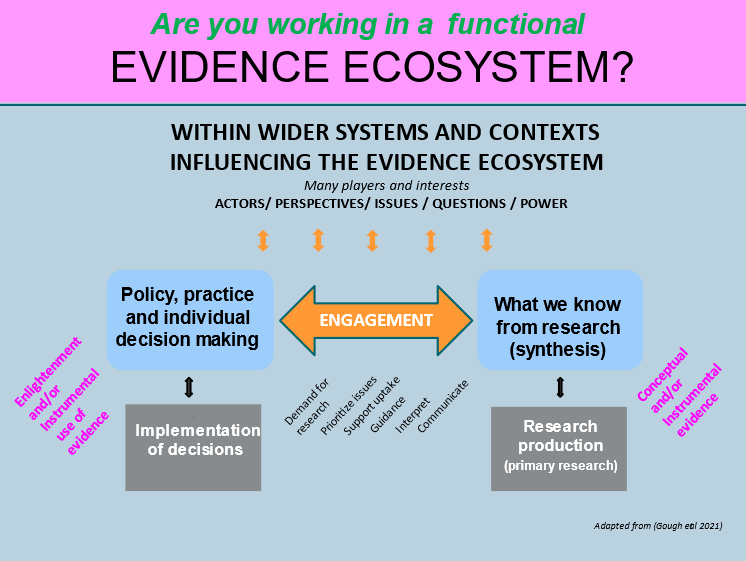
Research evidence can be useful (alongside lots of other information) in informing policy, practice and personal decision making. But does this always happen? It tends to be assumed that if research is available and relevant then it will be used in an effective self-correcting ‘evidence ecosystem’, but in many cases the ‘evidence ecosystem’ may be dysfunctional or not functioning at all. Potential users may not demand relevant evidence, not be aware of the existence of relevant research, or may misunderstand it use and relevance.

Knowledge brokerage intermediary (KBIs) agencies (such as knowledge clearinghouses and What Works Centre) aim to improve this by enabling the engagement between research use and research production. We believe that KBIs are essential innovations for improving research use. In this blog, we suggest four ways that they might be further developed by having a more overt focus on the extent that they themselves are evidence informed in their work, as we explore in our Evidence & Policy article.

Continue reading