Esmeralda Michel, Megan Mitchell, Nehal Eldeeb and Valerie B. Shapiro
This blog post is based on the Evidence & Policy article, ‘Promoting the use of research evidence from websites: optimising microsurveys as feedback loops to drive improvement’.
There are many efforts to make research evidence accessible to educators online through toolkits and in other user-friendly formats. Intermediaries – which are organisations that sit between research and practice – can take on the mission of synthesising, translating and sharing research for the public. One such intermediary is the Greater Good in Education (GGIE), an organization that hosts a website of evidence-based practices for educators. Yet a persistent challenge remains among these types of intermediaries: once research evidence is packaged and posted, how do we know the extent to which the evidence is being accessed, appraised and applied in practice? Intermediaries are missing ‘feedback loops’ that could help the intermediaries adapt and improve their efforts to promote the use of research evidence.
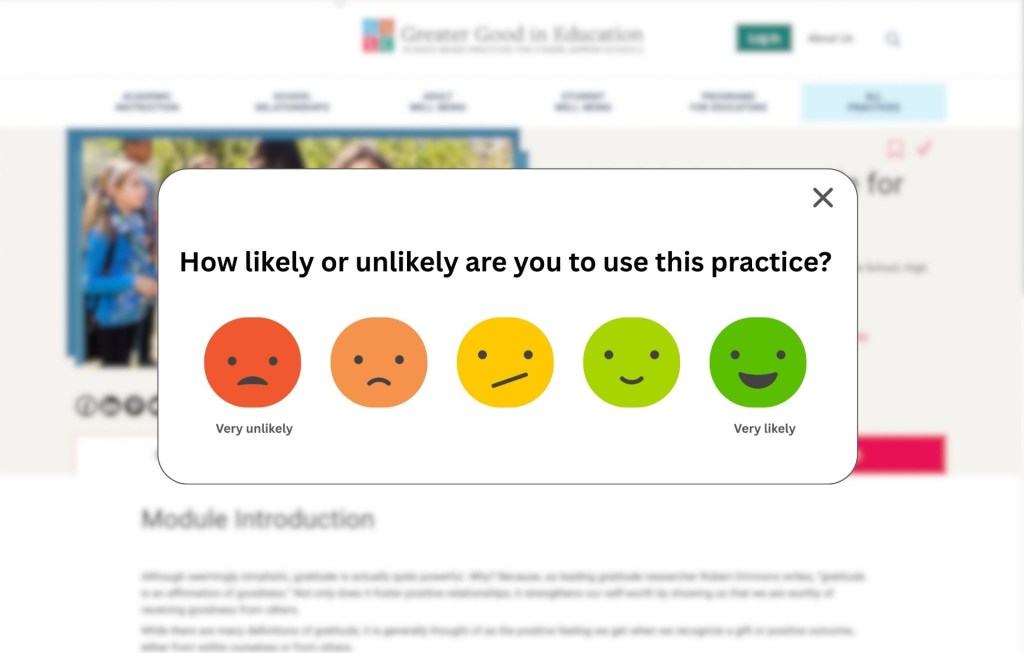
In a recent study published in Evidence & Policy, researchers Eldeeb, Ren, and Shapiro explored whether microsurveys could help fill this gap. Microsurveys are short surveys embedded directly on a webpage, triggered by specified interactions with the website. They can capture real-time feedback from users, providing actionable insights into whether research evidence is likely to be applied in practice.
Continue reading Evidence & Policy Blog