The changing culture of evidence use in local government

Mandy Cheetham

This blog post is based on the Evidence & Policy article, What I really want is academics who want to partner and who care about the outcome’: findings from a mixed-methods study of evidence use in local government in England’.

Background

It is recognised that closer interaction between those working in policy and practice and academic researchers increases the likelihood of evidence being used to improve outcomes, but progress remains slow. Policymakers and researchers continue to be seen (unhelpfully) as occupying separate worlds, with limited research undertaken into efforts to address this perceived division.

In this blog post, we outline the main messages from a recently published article in Evidence & Policy, which draws on a collaborative, mixed methods study funded by the Health Foundation: Local Authority Champions of Research (LACoR). We explore evidence use in the context of local government from the perspectives of those who work there.

Continue reading


Meeting in brackets – how policy travels through meetings

Sophie Thunus

This blog post is based on the Evidence & Policy article, ‘Meeting in brackets: how mental health policy travels through meetings’.

Meetings matter. They produce the policies for which they are organised. Yet meetings are taken for granted. We organise them, we participate in them, and we complain about them, especially when they do not achieve their purpose. However, we rarely question them: we continue to go to meetings that seem ineffective without asking why, and without wondering what these meetings might do to the policy process to which they relate, and to their participants.

The concept of meeting in brackets helps us to understand how meetings make policy. It has four implications, which have been derived from a multi-year sociological study of the implementation of a Belgian mental health policy.

Continue reading

‘Non-knowledge’ in crisis policymaking: amnesia, ignorance and misinformation

Adam Hannah, Jordan Tchilingirian, Linda Botterill and Katie Attwell

This blog post is based on the Evidence & Policy article, ‘The role of ‘non-knowledge’ in crisis policymaking: a proposal and agenda for future research’.

The ability to locate, comprehend, and discriminate between competing sources of knowledge is a major challenge for policymakers, particularly in times of crisis.

In our recent Evidence & Policy article, we argue that to better understand these ‘knowledge challenges’, policy scholarship should also consider ‘non-knowledge’. Examining non-knowledge involves investigating the strategies, practices and cultures that surround what is not known. Non-knowledge can result from genuine lack of knowledge or strategic avoidance.

Three forms of non-knowledge are most relevant for studies of public policy: amnesia, ignorance and misinformation.

Continue reading

Knowledge Brokerage: The Musical

Megan Auld, Emmah Doig and Sally Bennett

This blog post is based on the Evidence & Policy article, ‘Knowledge Brokerage: The Musical: an analogy for explaining the role of knowledge brokers in a university setting’.

It would be an untruth to say that we knew exactly what we were doing when we started our role as knowledge brokers. As experienced clinicians and researchers we’d lived on both sides of the knowledge-action coin, and we’d certainly had a few good tries at making them come together. The literature told us we were ‘capacity builders’, ‘knowledge managers’, ‘boundary spanners’ who required a myriad of personal characteristics to pull this thing off (only some of which, to be honest, I thought I actually possessed). Here began a journey to make the theoretical come to reality and after living and breathing knowledge brokerage in a university setting for a year, we wanted to make sure that the experiences we had would span the boundaries of knowledge for other would-be brokers.

In an exploratory study, as two knowledge brokers we recorded our activities within a school of health in a large university setting using the Expert Recommendations for Implementation Change (ERIC) categories over a period of nine months and reported the results in our recently published Evidence & Policy practice paper. We wanted to make sure that we helped knowledge brokers know what the job consisted of when they showed up to work on a Monday morning. Thus, the birth of Knowledge Brokerage: The Musical – an analogy to help explain the role of knowledge brokers in higher education.

Continue reading

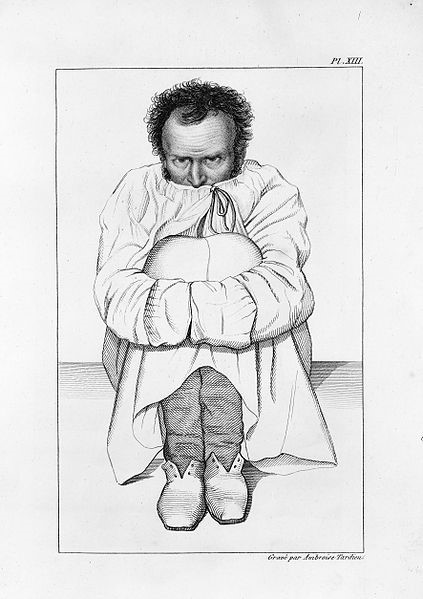
Evidence-based practice in social care: straitjacket – or fluid support?

Isabella Pistone, Allan Lidström, Ingemar Bohlin, Thomas Schneider, Teun Zuiderent-Jerak and Morten Sager

This blog post is based on the Evidence & Policy article, ‘Evidence-based practice and management-by-knowledge of disability care: Rigid constraint or fluid support?’.

Evidence-based practice in social work is often critiqued for constraining practices by emphasising rigid methods and standardised interventions that exclude professional and clients’ experiences. Our research within disability care found rather it catalysed a dynamic interplay between local and external knowledge, as explained in our recently published Evidence & Policy article.

Continue reading

Breaking the fourth wall: evidence communication inside policy organisations

Christiane Gerblinger

This blog post is based on the Evidence & Policy article, ‘Peep show: a framework for watching how evidence is communicated inside policy organisations’.

Seeing how governments formulate decisions is a crucial component of their ability to claim democratic legitimacy. This includes being seen to draw on the knowledge and evidence produced by their civil service policy advisers. Yet much of the advice provided to governments is being increasingly withdrawn from public accessibility.

With governments likely to benefit from a status quo that normalises withdrawal of policy processes and rationales from public view, it is important to find alternative ways to illuminate how policy officials communicate their evidence and how that evidence is used in political contexts by governments to make decisions on our behalf.

Continue reading

Empathy is key to addressing obstacles to policy progress

Serena Bartys

This blog post is based on the Evidence & Policy article ‘Empathy is key: addressing obstacles to policy progress of ‘work-focused healthcare’’.

Pre-pandemic, the UK government estimated that work loss due to ill-health costed around £100bn per year. This problem places an unsustainable burden on health, employment and welfare systems, and is a major cause of socioeconomic disadvantage and inequality. The potential for healthcare to reduce this burden has been reflected in numerous UK policy initiatives and clinical guidance ever since 2008, when Dame Carol Black published her seminal report Working for a Healthier Tomorrow.

However, over a decade later, avoidable work disability remains a leading public health concern. One key concept – healthcare professionals discussing work with their patients during routine consultations – has remained elusive in practice. There are clearly significant obstacles to translating ‘work-focused healthcare’ policy into practice. Our Evidence & Policy article sheds light on what those obstacles are and how they may be addressed. It raises wider concerns about how scientific evidence is used and understood by policymakers, making a novel contribution to the expanding literature which suggests that researcher-policy-practice relationships are key factors in mobilising the evidence.  

Continue reading

Community support versus health care services: time to change our definition of impact

Janet Harris and Alexis Foster

This blog post is based on the Evidence & Policy article ‘Using knowledge brokering to produce community-generated evidence

Non-profit community anchor organisations in England typically provide a range of support to local people, including wellbeing support, advocacy, social activities, and training and employment advice. This array of services takes a wider perspective on the determinants of health than the approach taken within the National Health Service (NHS), which generally focuses on mental and physical ill health.

Despite the different approaches, the funding for community anchor organisations is often dependent on the impact they have on health outcomes. Is this a good basis for judging the value of holistic support?

Continue reading

Maximising stakeholder engagement to prioritise future research

Natalie Kennie-Kaulbach, Jennifer E. Isenor and Sarah Kehoe

This blog post is based on the Evidence & Policy article ‘Use of a knowledge exchange event strategy to identify key priorities for implementing deprescribing in primary healthcare in Nova Scotia, Canada

How can complex research results be shared with diverse stakeholder groups? How can stakeholders be engaged in generating future research priorities? How can diverse stakeholder voices be represented? The transfer of knowledge gained from research to stakeholders is becoming increasingly important for the uptake of results into policy and practice and to inform the direction of future research. We take this opportunity to share our perspectives on maximising stakeholder engagement and strategies for successful uptake.

Continue reading

A ‘RECIPE’ with example principles and strategies for research partnerships

Femke Hoekstra, SCI Guiding Principles Consensus Panel and Heather L. Gainforth

This blog post is based on the Evidence & Policy article ‘Principles and related strategies for spinal cord injury research partnership approaches: a qualitative study

How can we improve the use of research findings in policy, community and service settings? The answer could be simple: do research together with people that will use and can benefit from the research. In other words, do research in partnership with research users. While this sounds promising, building and maintaining meaningful partnerships is rarely so simple. Tokenistic approaches to research partnerships are a particular risk – this happens when research users are asked to endorse a research project over which they have little control.

Continue reading