What can we learn from co-production approaches in voluntary sector evaluation work?


Louise Warwick-Booth, Ruth Cross and James Woodall

This blog post is based on the Evidence & Policy article, Obstacles to co-producing evaluation knowledge: power, control and voluntary sector dynamics’, part of the Special Issue: ‘Learning from Failures in Knowledge Exchange.

Co-production has been increasingly discussed as a positive and useful approach in health and social care research, based on principles such as partnership working, reciprocation, power sharing and the appreciation of all expertise. We have used co-production values to inform our evaluation work for many years, but in our Evidence & Policy article we reflect upon the challenges that such approaches bring, specifically in relation to sharing findings, known as knowledge exchange. Our article discusses evaluation work across three interventions that constitute perhaps the most challenging of our experiences in over a decade of such work. Conflict in evaluation work remains largely underreported, but we feel our experiences provide a useful contribution for readers.

Continue reading

Why failure isn’t the f-word in knowledge brokering


Stephen MacGregor

This blog post is based on the Evidence & Policy article, Theorising a spectrum of reasons for failure in knowledge brokering: a developmental evaluation’, part of the Special Issue: ‘Learning from Failures in Knowledge Exchange.

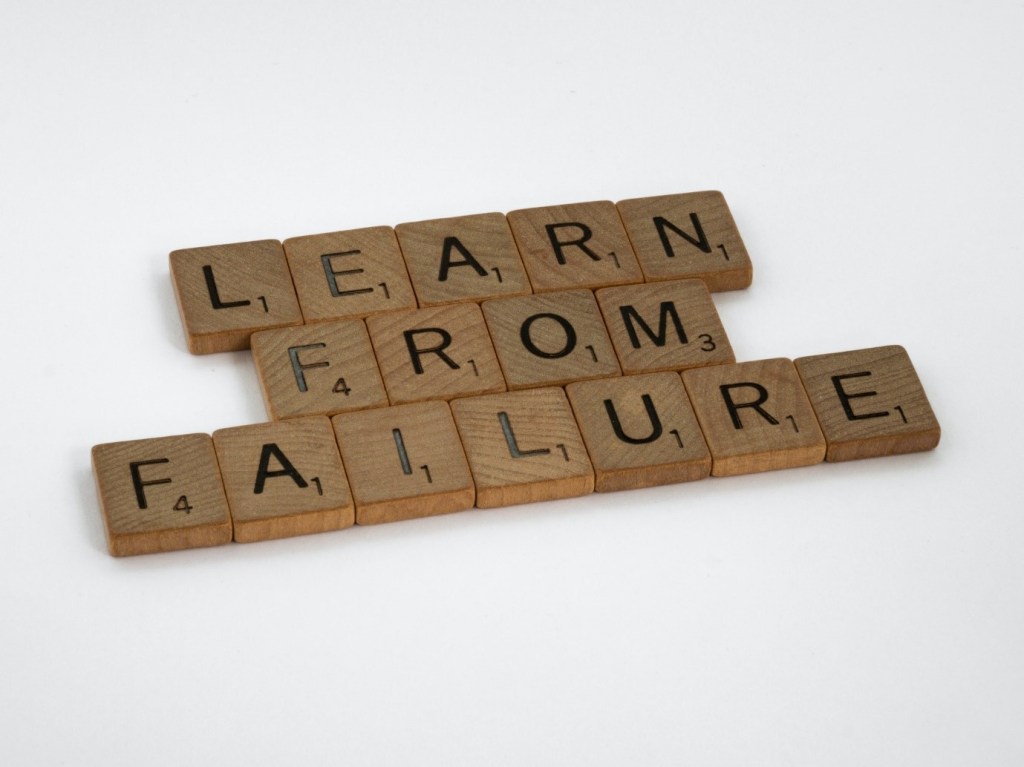
Failure often gets a bad rap, especially in professional settings. It’s usually seen as a waste of time and resources, something to steer clear of. But failure is not just an unfortunate outcome; it can be a crucial learning opportunity.

Particularly in higher education, the pressure is on for academics and universities to show the real-world impact of research. Here, knowledge brokers play a critical role: they are the human force behind efforts to connect research production and use contexts. Yet, the challenges and failures that these professionals face are not often discussed.

My recent Evidence & Policy article aimed to shed light on the spectrum of reasons for failure in the professional practice of knowledge brokering, drawing on a set of semi-structured interviews with a network of knowledge brokers. To understand knowledge brokers’ experiences, two frameworks were integrated: (a) the integrated Promoting Action on Research Implementation in Health Services (i-PARIHS) framework, and (b) Dr. Amy Edmondson’s Spectrum of Reasons for Failure framework.

Continue reading

Learning from failures in knowledge exchange: how hard can it be?


Peter van der Graaf, Ien van de Goor and Amanda Drake Purington

This blog post is based on the Evidence & Policy article, ‘Learning from failures in knowledge exchange and turning them into successes, which introduces the Special Issue: ‘Learning from Failures in Knowledge Exchange.

We don’t like talking about failures, as it signals loss of time, resources and reputation, but failures present opportunities for learning in knowledge exchange. However, this requires a ‘failure culture’ in academia and policy, in which failures are no longer avoided but actively encouraged. To learn how to turn failures into successes, we need to share and publish our failures, have early engagement with all stakeholders in the knowledge exchange process, and make more use of boundary spanners.

There are plenty of papers celebrating successes in knowledge exchange, but not many researchers and policy makers talk openly about their failures. However, learning from failures is just as important, if not more crucial, than celebrating successes. Allowing partners to reflect in a safe space on knowledge exchange practices and research projects gone wrong, in which communication broke down, partners did not engage or dropped out, and evidence was not taken up or ignored, will provide important lessons on how knowledge exchange practices and research can be improved.

At the 5th Fuse conference on knowledge exchange in public health, held in Newcastle, UK on 15-16 June 2022, we created such a space by bringing together over 100 academic researchers, policy makers, practitioners, and community members to share and reflect on thier failures and how to turn them into success. Our special issue brings together selected papers from the conference and papers that were submitted in response to an open call afterwards. From 23 original submissions from 14 different countries (including the UK, USA, Cananda, Norway, Switzerland, Kenya, Chile, South Korea, Canada and Portugal) and from a range of disciplines and areas of focus (Public Health, Primary Care, Oral Health, Sociology, Anthropology, Public Management, Policy-Making, and Community and Voluntary Sector), we invited four research papers and three practice papers for full submissions.

Continue reading

How to do knowledge mobilisation? What we know, and what we don’t


Hannah Durrant, Rosie Havers, James Downe and Steve Martin

This blog post is based on the Evidence & Policy article, ‘Improving evidence use: a systematic scoping review of local models of knowledge mobilisation’.

Knowledge mobilisation (KM) describes a process for enabling the use of research evidence in policymaking and public service design and delivery. Approaches to KM have evolved over the last two decades – away from one-directional efforts to push research out to decision makers towards a kaleidoscope of research-policy-practice engagement across overlapping phases of knowledge production and policy action. These processes are generally poorly understood at local levels of decision-making, where the specificities of policy and public service context can undermine generic ‘what works’ claims.

Our recent Evidence & Policy article, ‘Improving evidence use: a systematic scoping review of local models of knowledge mobilisation’, identifies three key features of local KM as well as highlighting the gaps in our understanding of how KM is done and with what effect. 

Our aim was to determine how KM is done ‘on-the-ground’, which can get obscured in frameworks that emphasise complexity while simplifying process. We argue that more detail is needed on these practices of KM to inform and improve process. Equally, attention is also needed on demand for and impact of evidence on policy and practice decisions.

Continue reading

Naturopaths place a stronger emphasis on the patient’s experience of their health compared to information from other health professionals when making clinical decisions


Prof Amie Steel, Dr Iva Lloyd, Prof Matthew Leach and Dr Vicky Ward

This blog post is based on the Evidence & Policy article, ‘Naturopaths’ behaviours, attitudes and perceptions towards the use of knowledge and information sources’.

The modern health landscape is dominated by the evidence-based practice paradigm which asks health professionals to prefer research evidence over other forms of knowledge and information when providing care to their patients. However, clinicians from most areas of health – including general practice and allied health – have argued that the realities of practice are not so simple. While this ‘messiness’ of clinical practice is documented for many mainstream health professions, there has been little to no research examining how clinicians from traditional medicine systems use knowledge and information in their practice, until now.

An international survey of naturopaths was recently published in Evidence and Policy which found they used a diverse range of knowledge and information sources when making clinical decisions. The survey respondents practice naturopathy, a traditional medicine system originating from Europe but now practiced in 108 countries across all world regions. Naturopathy uses a highly patient-centred and holistic clinical approach that prioritises preventive health and wellness, and patient education and empowerment.

Continue reading

Four questions relating to creativity and co-production

Joe Langley, Nicola Kayes, Ian Gwilt, Erna Snelgrove-Clarke, Sarah Smith and Claire Craig

Reflections arising from an Evidence & Policy Special Issue exploring the role and value of Creative Practices in Co-production. This blog post is based on the Editorial to the Special Issue, ‘Exploring the value and role of creative practices in research co-production’.

Our Evidence & Policy Special Issue, exploring the value and role of creativity and co-production in research, highlights four key questions:

  1. What constitutes research? And who decides?
  2. What constitutes legitimate knowledge?
  3. What constitutes creativity and co-production in research?
  4. To what extent are we constrained in the opportunities to undertake ‘creative’ research?
Continue reading

What does the literature tell us about brokers, intermediaries and boundary spanners?

Jennifer Watling Neal, Brian Brutzman and Stephen Posner

This blog post is based on the Evidence & Policy article ‘Understanding brokers, intermediaries, and boundary spanners: a multi-sectoral review of strategies, skills, and outcomes

Research evidence can help policymakers make decisions about society’s biggest challenges such as combating climate change, responding to the COVID-19 pandemic and seeking racial justice. However, exchanges between policymakers and researchers are complex and often require the help of individuals and organisations serving in broker, intermediary or boundary spanner roles.

Although brokers, intermediaries and boundary spanners are recognised across the environment, health and education sectors, there have been limited opportunities to explore how literature across sectors characterises what these individuals and organisations do, what skills they need and what outcomes they produce. Therefore, in a recently published Evidence & Policy article, we reviewed 185 conceptual and review papers across the environment, health and education sectors with the goal of understanding the strategies, skills and expected outcomes of brokers, intermediaries and boundary spanners.

Continue reading

Community support versus health care services: time to change our definition of impact

Janet Harris and Alexis Foster

This blog post is based on the Evidence & Policy article ‘Using knowledge brokering to produce community-generated evidence

Non-profit community anchor organisations in England typically provide a range of support to local people, including wellbeing support, advocacy, social activities, and training and employment advice. This array of services takes a wider perspective on the determinants of health than the approach taken within the National Health Service (NHS), which generally focuses on mental and physical ill health.

Despite the different approaches, the funding for community anchor organisations is often dependent on the impact they have on health outcomes. Is this a good basis for judging the value of holistic support?

Continue reading

Maximising stakeholder engagement to prioritise future research

Natalie Kennie-Kaulbach, Jennifer E. Isenor and Sarah Kehoe

This blog post is based on the Evidence & Policy article ‘Use of a knowledge exchange event strategy to identify key priorities for implementing deprescribing in primary healthcare in Nova Scotia, Canada

How can complex research results be shared with diverse stakeholder groups? How can stakeholders be engaged in generating future research priorities? How can diverse stakeholder voices be represented? The transfer of knowledge gained from research to stakeholders is becoming increasingly important for the uptake of results into policy and practice and to inform the direction of future research. We take this opportunity to share our perspectives on maximising stakeholder engagement and strategies for successful uptake.

Continue reading

Four practical steps to increase knowledge exchange between researchers and policymakers

Peter van der Graaf

Keen to have impact with your research but getting lost in all the knowledge exchange frameworks and models that are out there? Based on ten years’ experience working in translational public health for Fuse – The Centre for Translational Research in Public Health, a UK Clinical Research Centre collaboration across five universities in North East England, we identified four practical steps to develop collaborative research and achieve meaningful change in policy and practice.

The challenges of using research to inform policy and practice are well documented, including in public health where the evidence base for interventions or programmes is patchy or contested. In response to these challenges, an abundance of models and frameworks have been developed in recent years that try to define the knowledge exchange process (how research evidence can be used, in combination with other types of knowledge, to change policy and practice). Practitioners and researchers venturing into the field of knowledge exchange are bewildered by the options available, which don’t go beyond the conceptual level and fail to describe in practical terms what research translation on the ground looks like.

Continue reading