Supporting effective collaboration in large transdisciplinary research teams


Taru Silvonen and Ges Rosenberg

This blog post is based on the Evidence & Policy article, Optimising teamworking processes in an ongoing research consortium: a qualitative study’.

Considering collaboration is needed to solve complex societal problems, why are the structures that can help teams work together so often overlooked in research settings?

Complex research projects often require large teams with a wide range of expertise to work together. Working across disciplines and professional boundaries can be exciting but also comes with its own challenges, as shown by research in team science. These challenges are particularly present in transdisciplinary partnerships that aim to tackle evolving societal challenges, which makes our work relevant beyond academic teams. While interdisciplinary teams combine knowledge from different fields, transdisciplinary teams aim to create real-world change by involving both academic and non-academic partners. This provides opportunities for peer learning as well as bridging thinking between different perspectives. However, an appreciation of different ways of working, thinking, and communicating within a team will be required.

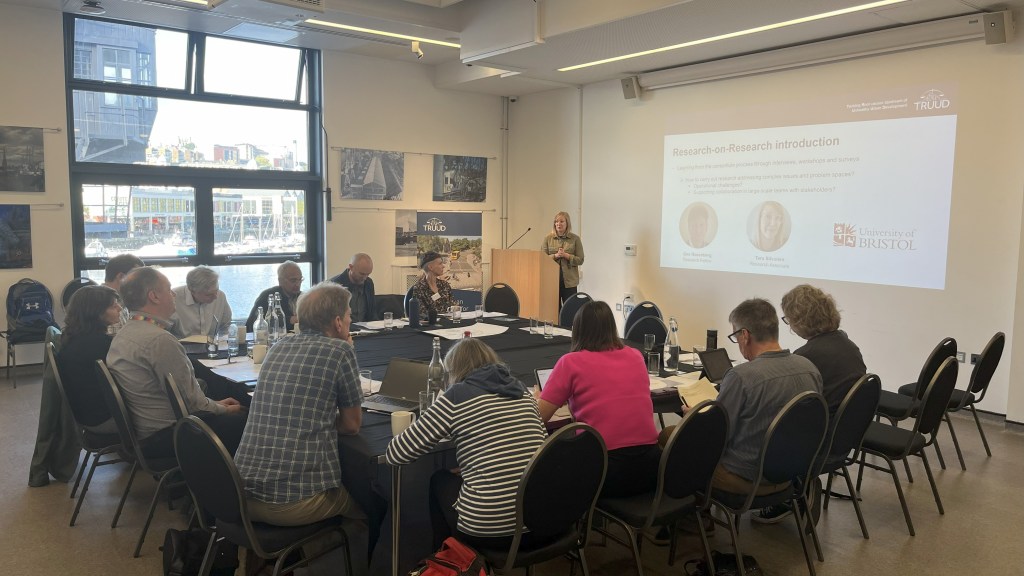
Our Evidence & Policy article shares insights from a UK-based research consortium called TRUUD (Tackling Root Causes Upstream of Unhealthy Urban Development), which focuses on creating healthier urban environments to reduce non-communicable diseases (NCDs) in the UK. TRUUD consists of 40+ academics in a transdisciplinary consortium, meaning it does not just combine academic disciplines – it also includes practitioners and stakeholders working together to solve real problems. Our qualitative study explores what helps large, complex teams work well together, especially in transdisciplinary (TD) settings, and how to overcome common challenges (i.e. building shared understanding and navigating conflict).

Continue reading


Learning through comparison


Katherine Smith, Niklas Andreas Andersen and Valérie Pattyn

This blog post is based on the Evidence & Policy Special Themed Section ‘Learning Through Comparison’, Published in Evidence & Policy Vol 21 No 2, May 2025.

One of the central aspects of any process of learning and knowledge generation is the act of comparison. By comparing how our own ideas, norms and actions align or differ with those of others, we can see ourselves in a new light and thus better understand the particularities of our own situation as well as potentially re-evaluate taken-for-granted assumptions. This is true of every-day examples of individual learning as well as learning within and across research-communities. However, learning through comparison is also an inherently difficult endeavour as it often entails acquiring in-depth knowledge of research areas or settings that are (at least initially) completely foreign to us. This is perhaps one of the reasons why many fields of research often struggle to produce truly comparative research.

This is indeed the case with the now extensive research exploring, and trying to strengthen, the use of evidence in policy and practice. Single case studies and analyses of specific policy domains, countries or jurisdictions dominate this literature, limiting our ability to understand and compare how evidence, and evidence-for-policy mechanisms, function across time, and distinct institutional, national, and disciplinary contexts. The consequence is, we suggest, that we’re likely to be missing opportunities for cumulative knowledge building (in research) and lesson drawing (in practice).

Continue reading

Building bridges between research and policy: lessons from the ESRC policy fellowship programme


Jessica Benson-Egglenton and Matthew Flinders

This blog post is based on the Evidence & Policy article, ‘Understanding the dynamics of research policy fellowships: an evaluative analysis of impacts and ecosystem effects’.

An early evaluation of a major UK policy fellowship programme reveals both promising impacts and significant challenges in bridging the research-policy divide.

This blog post is based on research evaluating the Economic and Social Research Council (ESRC) Policy Fellows scheme (2021-2023).

In 2021, the ESRC invested £2.5 million in placing 24 academic researchers within government departments for up to 18 months. This ‘Research to Policy’ (R2P) fellowship programme aimed to inject research expertise directly into policymaking while helping academics better understand how government works. Our evaluation of this pilot programme reveals three key findings.

Continue reading

Evidence & Policy Call for Associate Editors


The Editorial Management Board of the journal Evidence & Policy invites applications for Associate Editors. Evidence & Policy is the first peer-reviewed journal dedicated to comprehensive and critical assessment of the relationship between research evidence and the concerns of policy makers and practitioners, as well as researchers.

Continue reading

Shaping policy with climate resilience stories: Cape Town’s most affected speak for themselves


Laurence Piper, Gillian Black, Anna Wilson, Liezl Dick and Tsitsi Mpofu-Mketwa

This blog post is based on the Evidence & Policy article, ‘Policy engagement as ‘empowered representation’: democratic mediation through a participatory research project on climate resilience’.

Policy engagement is both a condition and moral obligation of publicly funded research projects in many countries, and our case in South Africa was no different. It was just relatively difficult.

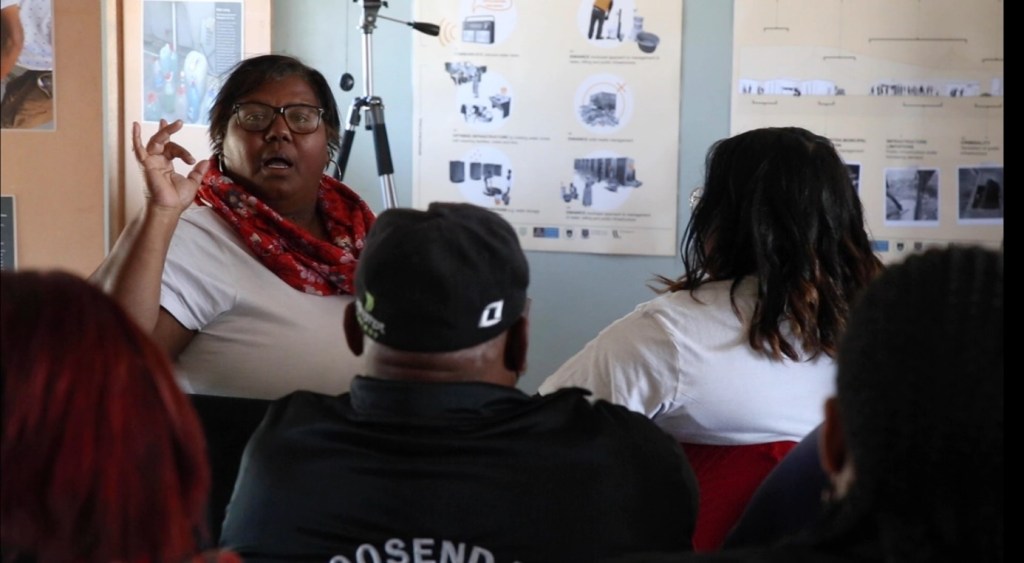
In 2019 we won a UKRI grant to do participatory research on how people living in poor settlements in Cape Town experience and respond to the climate-related hazards of water scarcity, floods and fires. The idea was to work closely with affected community members in understanding how they coped with these disasters, and what they thought could be done better in the future, by themselves and with help from others. We discussed our experiences in our recent article in Evidence and Policy, and summarise some of them here.

These community participants then presented their experiences and ideas for climate resilience as ‘best bets’ to government officials in a series of deliberative workshops.

Continue reading

Bridging the boundaries between research evidence and local policy development


Nicola Carroll and Adam Crawford

This blog post is based on the Evidence & Policy article, ‘Cultivating ‘communities of practice’ to tackle civic policy challenges: insights from local government-academic collaboration in Leeds’.

Working across sectoral boundaries offers exciting prospects for academics and municipal policymakers to develop innovative solutions to local issues through exploring shared concerns from their distinct professional perspectives. Yet organisational boundaries present well-recognised impediments to research-policy interaction. Drawing on findings from a Review of Collaboration between academics and local government officers in Leeds, we propose that active cultivation of civic ‘communities of practice’ offers a promising approach for connecting research evidence with social, environmental and economic challenges that confront local authorities and their citizens.

Crucially, we argue that boundary crossing relationships between professionals are key facilitators of effective civic collaboration that need to be nurtured and supported organisationally. This means putting inter-sectoral mechanisms in place that help ‘bridge’ institutional divides, without stifling the enthusiasm and dynamism that underpins meaningful knowledge exchange.   

Continue reading

Who do teachers turn to in times of political trauma?


Mariah Kornbluh, Amanda Davis, Alyssa Hadley Dunn and Kristina Brezicha

This blog post is based on the Evidence & Policy article, ‘Exploring the role of evidence-based educational resources and brokering in the wake of political trauma’.

On 6th January 2021, thousands of people descended upon the US Capitol to disrupt the counting of electoral votes in the US presidential election. Televised acts of physical violence were broadcast across the nation and many children were watching. Within hours of the attack, educators were ‘floundering’, trying to figure out if and how they would discuss what happened with their students the next day. Take for example, a Social Studies Subject Coordinator in Florida:

Kids come into school looking for answers. What does that mean? I’m like, ‘alright, what do we got?’ Because teachers were going to come to me, and I feel it was important that as a district person, we provide support. My superintendent said, ‘we’re not mentioning it.’ I was like, ‘We gotta do something, we gotta do something. If we just put out a statement. What is, what is the role of the Vice President? And why did we do that on January sixth?’ It was a teachable moment.

Continue reading

Minding the gap between research and practice in adult social care


Karen Gray, Ailsa Cameron, Christie Cabral, Geraldine Macdonald and Linda Sumpter

This blog post is based on the Evidence & Policy article, ‘Shooting in the dark’: implications of the research–practice gap for enhancing research use in adult social care’.

There is great potential for research to inform adult social care practice. However, a gap remains between this potential and its actual use by those who plan, commission or deliver care. In our recently published paper in Evidence & Policy we consider this gap. We also reflect on the implications of the continuing need to ensure that research is there – relevant, accessible, usable and used.

In 2022 we interviewed people in three local authorities. When asked what they thought research was for, most emphasised the belief that it should improve the lives of people using services. Some mentioned improving their own practice. Others talked about its value in helping them ‘fight their corner’ when a difficult decision had to be made or course of action justified.

Continue reading

Four approaches to navigating boundaries in co-produced health research


Chris Ackerley and Ellen Balka

This blog post is based on the Evidence & Policy article, ‘Navigating boundaries in coproduced research: a situational analysis of researchers’ experiences within integrated knowledge translation projects.’

Increasingly, researchers are collaborating with partners outside of academia – including patients, practitioners and policymakers – to create evidence that aims to be more useful and usable in practice. In the Canadian health sector, this kind of research coproduction is often called integrated knowledge translation (IKT).

A central idea in research coproduction is that bringing together people with different expertise is more likely create impactful evidence. Yet, collaborators’ differences can also present practical challenges for research projects.

Continue reading

We need a balanced approach to research ethics if we want our research to help everyone


Michael Sanders and Vanessa Hirneis

This blog post is based on the Evidence & Policy article, ‘Consent, assent and randomised evaluations.

The last decade or so have seen an explosion in the number of randomised controlled trials conducted in schools in the UK, and a similar, if less stratospheric, rise elsewhere in the world. The rise in the UK can be attributed in large part not to methodological interest by education academics, but the creation of the Education Endowment Foundation. Forming part of the UK Government’s “What Works” network aimed at improving evidence-informed decision-making in policy and overseeing a budget of more than £100 million, the EEF has funded hundreds of randomised trials of different interventions to boost children’s and young people’s attainment.

Enthusiasts of randomised trials argue that they provide the best and simplest (or least statistically burdensome) way of findings out which interventions work. However, opponents, often those responsible for designing and delivering interventions, consider them unethical because they necessitate withholding a potentially beneficial intervention from young people. In our paper, we consider another aspect of the ethics of randomised trials with young people – consent.

Informed consent is the cornerstone of postwar research, and aims to ensure that people are not experimented on against their will. As a principle, it is hard to argue with and should be at the centre of our thinking about how to run these kinds of trials.

Continue reading